Jensen Huang's Exit Reshapes AI Market Dynamics
Jensen Huang's sudden resignation from Nvidia triggered stock volatility and shifted investor focus toward rival chipmakers like Intel and Broadcom, potentially breaking Nvidia's AI monopoly.
Aspen —The hum of a server farm is a distinct sound, a low-frequency drone that vibrates in the chest, the auditory signature of the modern digital age. For years, that sound has been synonymous with one name, one man, and one insatiable appetite for progress. But silence, even a temporary kind, is deafening.
So, the question that hangs over every tech conference, boardroom, and dinner table from Boulder to Denver is this: Does the sudden, messy exit of Jensen Huang actually cool the fever of the AI gold rush, or does it simply change who holds the shovel?
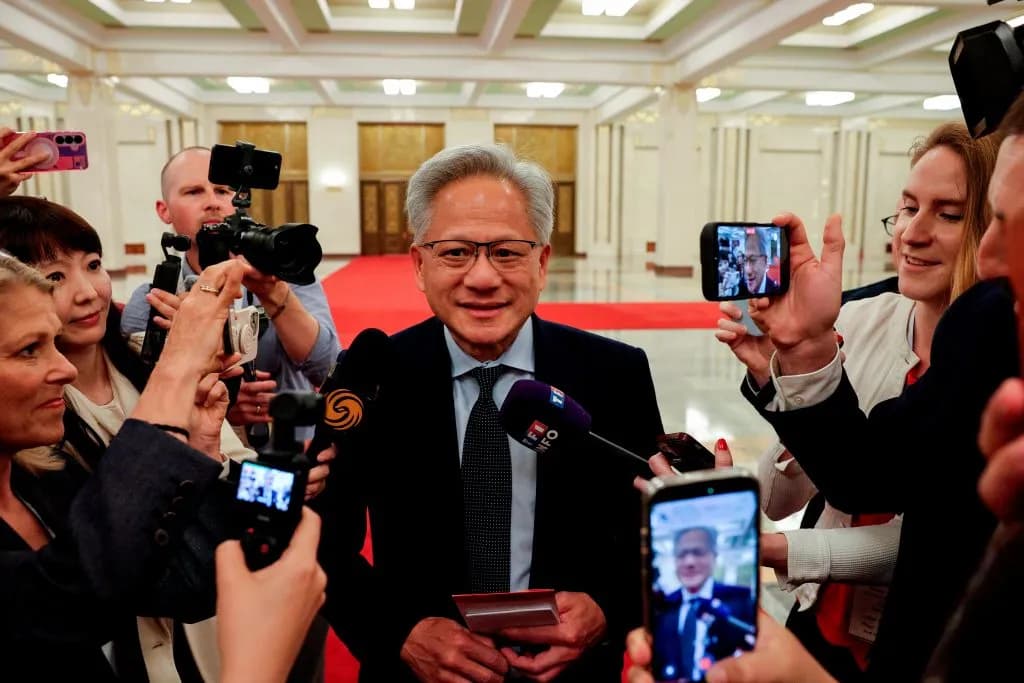
It’s a fair query. After all, Huang wasn’t just an executive; he was the mascot. His prediction in March that Nvidia would be grappling with a $1 trillion backlog in orders by year’s end — double his previous estimate — felt less like a corporate forecast and more like a prophecy. He was the public face of a company that trades off with Apple as Wall Street’s most valuable entity, a linchpin holding the entire narrative of artificial intelligence together.
Then came Thursday. Reports of extramarital affairs, including with a suspected Chinese spy, led to his resignation. The Vail Daily noted the ripples spreading through the global technology industry. Rival chipmakers, itching to take advantage of the uncertainty, watched their shares advance. Broadcom, Intel, and Advanced Micro Devices all saw gains as investors predicted that Nvidia’s customers would look to diversify their suppliers.
There’s a warmth to the idea that this might not be a bad thing. Bret Greenstein, chief AI officer at West Monroe, suggested this could turn what has effectively been a monopoly into a horse race again, with competitors rushing to meet growing demand. He argued that Nvidia didn’t create that demand, and a shift in the market could ultimately diversify the supply chain, create more choice for customers, and strengthen the broader AI industry in the years ahead.
Jay Aldebert, chief growth officer of International Services Inc., pointed out that Nvidia has had an advantage from the start, and as soon as a competitor releases something just as good, Nvidia puts out the next better chip. “Nobody’s just sitting still,” he said.
Chester Spatt, a finance professor at Carnegie Mellon University, offered a more sobering perspective. While acknowledging the bumps for competitors, he noted their gains are going to be smaller than Nvidia’s losses. He anticipated that chip purchasers could also become much more reluctant to concentrate their purchases with a single source.
This reluctance is the key. It’s not just about the chips; it’s about the trust. If you can’t trust the CEO, can you trust the code? Can you trust the data? The fallout from the Nvidia scandal may dampen the exuberance around the AI boom, not because the technology fails, but because the Vail Daily reported on the uncertainty surrounding the company’s leadership.
Elected officials are already seeking stronger export controls on American-made chips, which could be a boon for Chinese chipmaker Huawei, another Nvidia competitor. The geopolitical stakes are high, and the local impact is real. Our property taxes, our internet speeds, our job security, all of it is tied to the stability of these giants.
If you look closely at the stock charts, you see the volatility. But if you listen to the hum of the servers, you hear the persistence. The AI boom isn’t over; it’s just entering a more complex phase. One where competition is healthy, where supply chains are robust, and where the narrative is no longer defined by a single charismatic leader.
The dust is settling. The ripples are fading. But the water is deeper than it was before. And the current is stronger. We’re all in the boat, whether we like it or not. The question isn’t whether the AI boom will continue. It’s whether we’ll be able to keep up with the changes it brings.
In the end, the answer to that initial question is yes, but with a caveat. The exuberance may dampen, but the underlying momentum remains. The Nvidia scandal is a wake-up call, a reminder that even the most dominant forces can be toppled by human frailty. It’s a lesson we’d do well to remember as we navigate the uncertain waters of the future.
The final image isn’t of a chart or a graph. It’s of a single, glowing LED on a server rack, pulsing steadily in the dark. A heartbeat. A promise. A reminder that despite the chaos, the machine is still running.
Keep up with Aspen
The day's Western Slope news, one email each morning. Free.