Judge Halts Postal Ballot Rule as North Carolina Ships Votes
A federal judge halted the new postal ballot rule as North Carolina began shipping votes, prompting a same-day Supreme Court appeal from the administration.
Aspen —“The $64,000 question is, is this authorized by the statute?”
That was the pivot point in a Boston courtroom on Thursday, where Department of Justice attorney Michael Velchik stood before U.S. District Court Judge Indira Talwani, arguing that the legal authority to reshape how mail ballots are delivered matters more than whether the machinery actually works. The Trump administration filed its appeal to the Supreme Court that same afternoon, hours after Velchik admitted he couldn’t tell the judge if the computer system governing the entire project was operational. It is a strange, frantic race against the clock, one that lands squarely in our living rooms as North Carolina begins shipping out mail ballots on Friday for the November midterms.
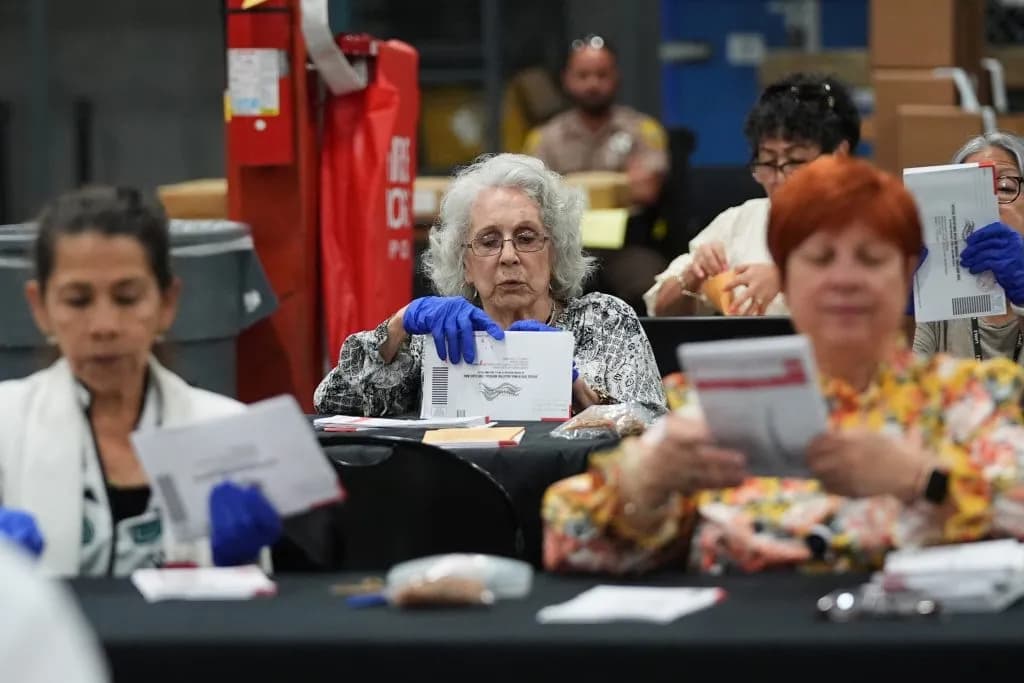
If you look closely at how this plays out, it isn’t just a legal squabble; it is a logistical gamble. Under the executive order Trump issued last spring, the U.S. Postal Service can refuse to deliver ballots from states that don’t follow a uniform envelope style and submit their voter lists to an online portal. That portal is supposed to track tens of millions of mail ballots, matching the data on the envelopes against the uploaded lists. If there is a mismatch, the ballot doesn’t move. It sits in a facility, unverified, while the election date creeps closer.
Talwani pressed on that gap between policy and practice. She noted she did not have a declaration from the Postal Service explaining how the system would function, adding that it felt like the government was running an “experiment” to see if the infrastructure would hold up. During the hearing, she asked Velchik directly: “As you sit here today, you can’t tell me the government has a program ready to go?” The question hangs in the air, heavy with the weight of tens of millions of votes that depend on a server that was apparently still inactive Thursday.
Velchik countered that the agency would “fully implement the rule” published last month, framing the issue as one of judicial power rather than technical readiness. He argued that Talwani lacks the legal authority to stop the implementation, regardless of whether the portal is live. The high court’s conservative majority previously allowed the president’s plan to move ahead, though they have not yet decided on its overall legality. Now, with the midterm elections looming, the administration is asking them to reject Talwani’s order that halts the new rule.
There’s a warmth to the idea of a ballot simply arriving in your mailbox, a quiet ritual that has defined American democracy for decades. But this new framework introduces friction into that routine. Talwani, who prohibited the administration from implementing the order for this November cycle in June on the grounds that the changes came too close to voting day, is now considering whether to extend her temporary order barring the Postal Service from requiring use of the system through Sept. 10. The first state to send out all its mail ballots, North Carolina, kicks off the wave of shipping on Friday, with other states quickly following suit.
For folks in the valley and across the Western Slope, this means watching closely as the next few weeks unfold. The legal wrangling continues in lower courts even as ballots start moving through the mail system. We are watching a federal experiment unfold in real time, where the difference between a delivered ballot and a held one might come down to a glitch in an online portal that, as of Thursday, hadn’t been proven to work.
The air in the courtroom was tense, a mix of legal posturing and technical uncertainty that lingers long after the gavel falls.
Keep up with Aspen
The day's Western Slope news, one email each morning. Free.