Lynn Aliya Leads Basalt Workshop on Human Connection
Lynn Aliya, a public speaking instructor and medical empathy consultant, will lead a workshop at the Basalt Library on the importance of human connection in a world dominated by technology.
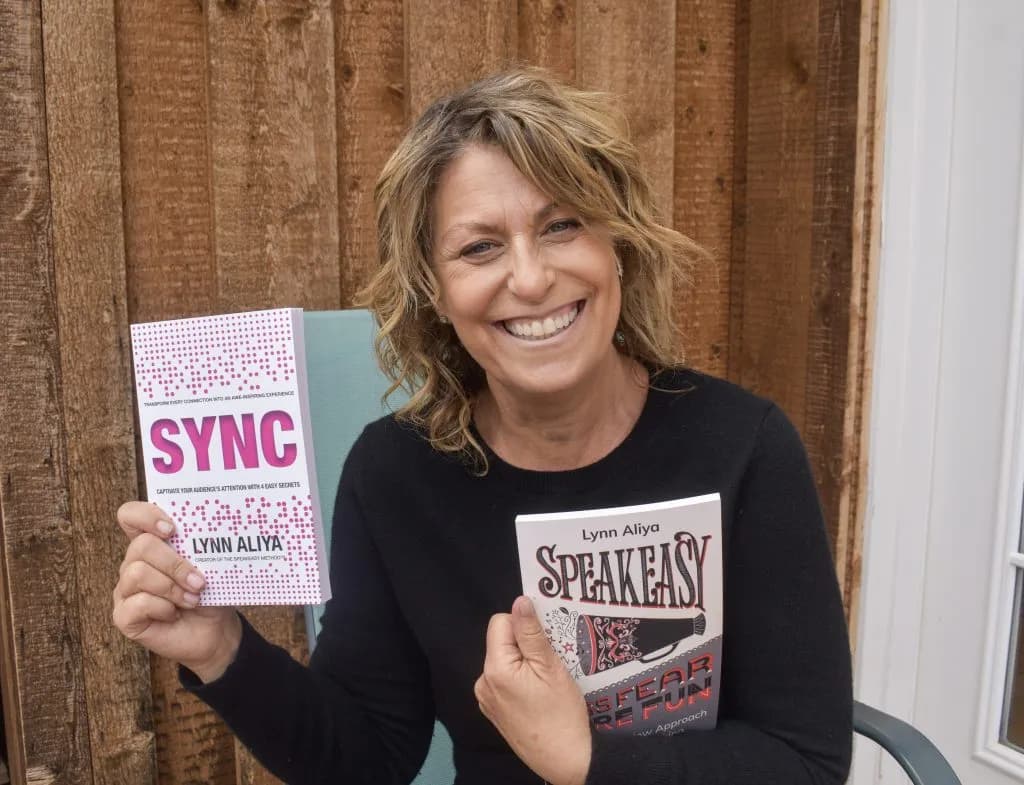
Glenwood Springs —Lynn Aliya stands at the front of a room, surveying the crowd as she prepares to lead a workshop on connection and communication. She asks people to notice what happens when they are truly heard, a question she's spent much of her life exploring. As an actor, playwright, and public speaking instructor at Colorado Mountain College, Aliya has approached this question from multiple angles. Now, with her second book, "SYNC: Transform Every Connection Into an Awe-Inspiring Experience," she's bringing this conversation to the Basalt Library.
The event, scheduled for 5:30-7 p.m. on a Wednesday, will feature a reading, Q&A, and interactive workshop centered around the book's four "EASY" principles: engage your audience, add to the conversation, synthesize, and yes. Aliya's goal is to help people think about how they connect in a world where much of daily life happens through screens. She poses a question that resonates with many: "How do we get people to put down their phones and pay attention?" As she speaks, it's clear that her work is driven by a desire to understand the intricacies of human connection.
Aliya's journey to this point has been winding. She trained at the Royal Academy of Dramatic Art in London and worked in regional theater, including at Steppenwolf Theatre Company in Chicago. She has written and performed one-woman shows and acted in films. But it's her work as a medical empathy consultant that has had a profound impact on her perspective. For about 25 years, she has been training doctors to communicate more effectively with patients, a role that has given her a deep understanding of the importance of empathy in human connection.
During the COVID-19 pandemic, Aliya was approached by a doctor from Mount Sinai Hospital in New York City to help write guidance for healthcare providers who were helping patients and families say goodbye over the phone or through iPads. This experience drove home the limits of technology in replacing human connection. As Aliya notes, "Even if you're saying goodbye over the phone, nobody, AI is never going to be able to touch each other's souls." This realization has informed her work on "SYNC," which explores how people can build trust and stay connected in a digital age.
As Aliya prepares to lead her workshop, she emphasizes the importance of putting down our phones and engaging on a deeper level. Her method, which she describes as "like Mad Libs for public speaking," is designed to make people feel more comfortable speaking in public. But it's not just about public speaking – it's about creating a sense of connection and community. Aliya wants people to understand that "nothing is ever going to replace this thing called human connection, like the zap that we feel when we're together as humans."
The workshop is likely to be an interactive and engaging experience, with Aliya guiding participants through exercises and discussions designed to help them connect with others on a deeper level. As she speaks, it's clear that she is passionate about her work and committed to helping people build stronger, more meaningful relationships. And as the crowd gathers at the Basalt Library, it's clear that they are eager to learn from her and to explore the possibilities of human connection in a digital age.
Here's the thing, though: in a world where we're constantly connected to our screens, it's easy to forget the importance of human connection. We can get so caught up in our online lives that we neglect our real-life relationships. But Aliya's work is a reminder that there's no substitute for the real thing. As she says, "I don't care. They'll still always be a machine." It's a powerful statement, and one that resonates deeply in a world where technology is increasingly dominant.
As the workshop comes to a close, Aliya leaves the crowd with a lasting impression. She's not just a public speaking instructor or a medical empathy consultant – she's a champion of human connection. And as people file out of the library, they're likely to be thinking about the ways in which they can apply Aliya's principles to their own lives. They may be considering how they can put down their phones and engage more fully with the people around them. And they may be thinking about the ways in which they can build stronger relationships. As Aliya would say, it's all about creating a sense of connection and community – and that's something that we can all get behind.
The scene fades to a crowd of people, all of whom are looking more engaged, more connected, and more alive. They're not staring at their screens; they're looking at one another, and that's a powerful thing.
Keep up with Glenwood Springs
The day's Western Slope news, one email each morning. Free.