Mike Davis Turns Tech Wealth into Napa Valley Wine Empire
From coding in a garage to crafting premium wines, Mike Davis explains how he built Davis Estates in Calistoga, blending tech success with a passion for hospitality and terroir.
Aspen —The windmill on the label is sleek, almost minimalist, standing in stark contrast to the chaotic, sun-drenched sprawl of the Napa Valley vineyards it represents. But Mike Davis didn’t start with a windmill. He started with code.
It’s a pivot that feels less like a career change and more like a second life. In 1989, Davis and his wife Sandy founded Applied Computer Solutions out of a garage in Huntington Beach. They built computing systems for aerospace clients. They rode the tech wave. They made money. But every time they visited Napa, the wine took hold.
“We approached Davis Estates as a life experience rooted in hospitality, community and shared enjoyment,” Davis says. “It seemed a like a wonderful way to spend our lives.”
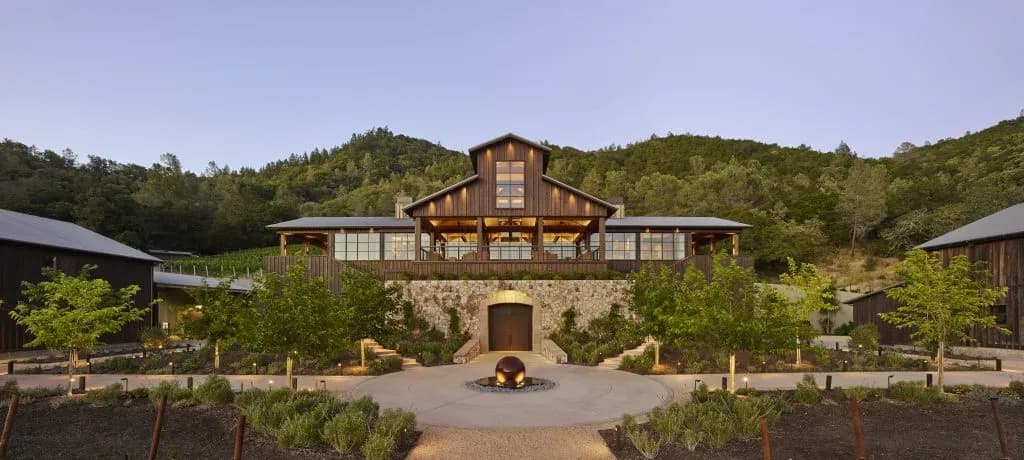
That was the thesis. The execution took five years of sweat equity, starting in May 2011 when the couple purchased a property formerly known as Saviez Vineyards at the base of the Vaca Mountains. They didn’t just buy land; they bought a vision. And then they assembled a team that reads like a who’s who of the industry. There’s Walter Leiva, a young winemaker who actually grew up in Napa, working alongside consulting legend Philippe Melka. There’s Davie Piña, whose family has farmed the valley since 1960. And there’s the late Howard Backen, the quintessential wine country architect, who designed the signature touring and tasting facility.
The result is Davis Estates, a 155-acre operation located just off the Silverado Trail in Calistoga. It’s family-owned. It’s grounded. And it produces wines that don’t just sit on a shelf — they demand attention.
I opened a box of samples recently. Inside were bottles of Cabernet Sauvignon and Cabernet Franc, their labels featuring that same sleek windmill. There was also a rosé called “Lily Fleur,” so named for the exquisite lilies rendered on its label. The tasting confirmed what the packaging promised: this is substance. But the story isn’t just in the bottle. It’s in the barn.
The hospitality experience centers around a lovingly restored barn and a winery and caves designed by Backen. It’s not just a place to pour a glass; it’s a place to spend an afternoon. The Davises turned their tech exit into a physical legacy, building vineyards across four distinct appellations: Calistoga, Carneros, Rutherford, and Howell Mountain. Each terroir tells a different part of the same story.
And that matters because it changes how you think about the Western Slope’s own wine country. We often talk about local production in terms of volume or price. But Davis Estates is selling an experience. They’re selling the idea that wine can be a “second act” for people who have already succeeded elsewhere. It’s a reminder that the best products often come from people who aren’t trying to be the biggest — they’re trying to be the most memorable.
The windmill still stands on the label. But the real image is the restored barn, bathed in that specific Napa golden hour light, waiting for the next visitor to walk through the doors.
Keep up with Aspen
The day's Western Slope news, one email each morning. Free.