Pitkin County Tests Evacuation Plans with GIS Software and RFTA
Pitkin County officials and RFTA conduct a tabletop exercise to test evacuation plans, leveraging new GIS mapping software and coordinated transportation strategies ahead of wildfire season.
Aspen —It’s easy to assume that when the smoke starts rolling down the Roaring Fork Valley, the first thing that matters is how fast your car can get out. We obsess over the physical act of fleeing — the ignition, the turn signal, the merge onto Highway 82. But here’s the thing though: if the system behind the exit doesn’t know which exits to open, or who is supposed to flip the switch, the fastest car in the world is just sitting in traffic.
Last month, the machinery of emergency response in Pitkin County didn’t just test its brakes; it tested its brain.
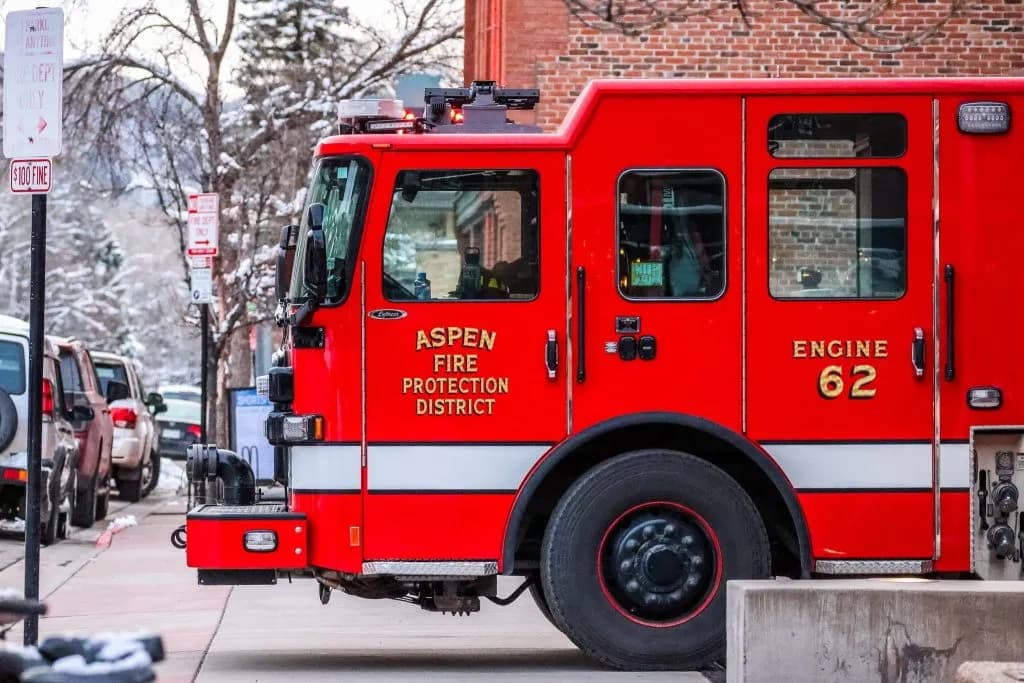
Personnel from Pitkin County Emergency Management, the Sheriff’s Office, Aspen Fire Protection District, the city of Aspen, the Roaring Fork Transportation Authority (RFTA), and Pitkin County Emergency Dispatch gathered for a tabletop exercise. It wasn’t a chaotic drill with sirens blaring and helicopters overhead. It was a quiet, deliberate conversation about chaos. They sat down to discuss possible emergency evacuation scenarios, specifically targeting the abnormally dry and hot winter that has locals eyeing the hills with more than a little anxiety.
Chris Breitbach, Pitkin County’s emergency manager, called it what it is: a way to test the plan.
“A tabletop exercise is to test the plan or policy, to clarify the roles and responsibilities — who is responsible for what part of the response,” Breitbach said. “And then talk about decision making and evaluate.”
The goal wasn’t to predict the exact shape of the next fire. Fires are messy. Evacuations are universal. The objectives were operational coordination, public information and warning, and transportation. You could apply that same framework to a water main break on Main Street or an active shooter event at the Aspen Pavilion. The specific hazard changes; the logistical headache remains the same.
And that matters because the county is betting on technology to manage the headache. Participants got hands-on practice with new GIS-mapping software designed to slice the valley into distinct evacuation zones. Breitbach explained that this work happens on “blue-sky days”, the calm before the storm. The county puts thought and effort into identifying these zones beforehand. When the incident commander needs to move people, they don’t start from scratch. They bring up the map. The zones are pre-identified as a starting point.
But maps are useless without the people to move the bodies. That’s where the collaboration with RFTA comes in. The transportation authority isn’t just about getting you to work on time; it’s about getting you out of town fast. Zac Sutherland, RFTA’s Safety, Security & Risk manager, noted that working alongside other agencies in a controlled setting helped clarify roles. It’s one thing to read a manual about how buses coordinate with fire trucks. It’s another to sit in the same room and realize you’re talking past each other.
The community has been preparing for this summer for months. Presentations from first responders have become a staple of local meetings. The Wildfire Collaborative Roaring Fork Valley even expanded its free curbside chipping program to Basalt-area residents, trying to incentivize the reduction of fuels in private yards. It’s a tangible effort to reduce the kindling before the spark arrives.
Yet, as the exercise wrapped up, the focus remained on the gap between preparation and reality. The new software is ready. The transportation partners are aligned. The fuel is being chipped. But the real test isn’t in a conference room with air conditioning. It’s in the heat of July, when the power flickers and the radio crackles, and the pre-identified zones suddenly look very different than they did on paper.
Back in the parking lot of the emergency dispatch center, the silence returned. The maps were closed. The radios were powered down. The drivers went back to their shifts, knowing that next time the sky turns orange, they won’t just be driving out; they’ll be following a plan that was built, tested, and refined right here, in the valley we all call home.
Keep up with Aspen
The day's Western Slope news, one email each morning. Free.

S&P 500 Slips Modestly as Weak Retail Sales and Oil Prices Drive Market Correction

Aspen Essay Connects Generations Through Highway 82 Landmarks