Rail Advocates Push Dedicated Ski Train to Solve I-70 Bottleneck
Rail advocates propose a dedicated ski train to bypass the I-70 bottleneck ahead of Utah's 2034 Winter Olympics, leveraging federal funding opportunities to solve chronic traffic issues in the Eagle Valley.
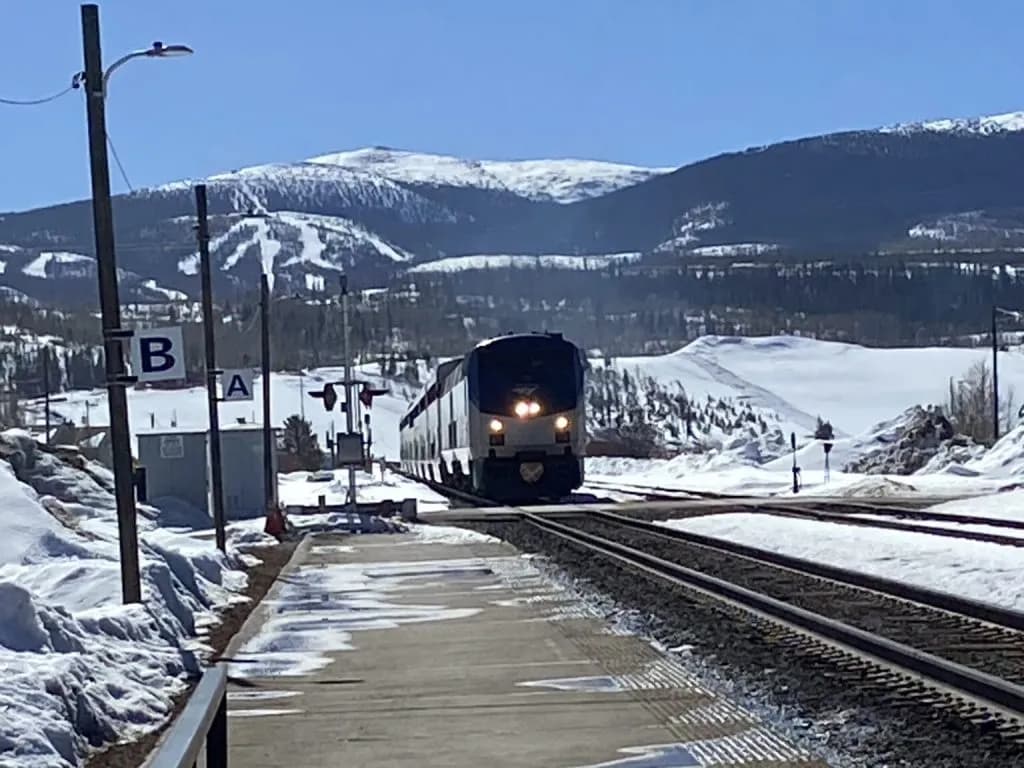
Aspen —The wind howls off the Continental Divide, rattling the windows of the Eagle Valley Enterprise. It’s the same wind that blew through the town hall meetings in the 1970s. It’s the same wind that still chills commuters stuck in the I-70 bottleneck today.
Utah is already planning for its 2034 Winter Olympics. Colorado is finally catching up.
A coalition of passenger rail advocates from both states is pushing for a dedicated ski train line. They want to solve the traffic nightmare on Interstate 70 before the Games arrive. The goal is simple: move people, not just cars. The method is controversial. The cost will be steep.
This isn’t a new idea. It’s a recycled one.
Former Colorado Gov. Dick Lamm knew this. In 2014, after Russia spent $9 billion on a high-speed rail link for the Sochi Olympics, Lamm changed his tune. He was teaching at the University of Denver then. He said he wouldn’t oppose a Colorado bid if it brought federal dollars to fix the I-70 choke point.
Lamm had led the charge to send the 1976 Winter Olympics back to the International Olympic Committee. Denver had been selected. Beaver Creek was proposed as a key venue. Lamm worried about zoning laws. He worried about environmental regulations being ignored. He worried taxpayers would foot the bill.
Denver voters agreed. They rejected the games. It remains the only time a U.S. city has done so after being selected.
Now, Utah has the 2034 Games in its pocket. They won the bid in 2018, largely by reusing venues from the 2002 Winter Olympics. The IOC shifted its strategy with "Olympic Agenda 2020" in 2014. The focus moved from building new stadiums to scaling back costs. Utah’s bid fit that mold.
Colorado’s advocates want to replicate Utah’s success. They want a train that bypasses the gridlock.
Kathy Heicher, president of the Eagle County Historical Society, remembers the 1976 bid well. She was 22. She had just graduated from Colorado State University. She landed in Eagle as a journalist. She heard about Lamm and the movement to reject public funding. She wrote an editorial supporting the rejection.
“Boom, in the door comes Arnold Nottingham,” she recalls. Nottingham was a local figure who pushed back against the anti-Olympics sentiment.
The short version: The traffic hasn’t gone away. It’s worse.
I-70 is still a bottleneck. It can’t be easily expanded. The terrain is too steep. The cost too high. Lamm said in 2014, “Just simply the Balkanized nature of the Olympics promised all kinds of logistical problems.”
The new push aims to use that logistical complexity to justify federal investment. If the Olympics require a train, the feds might pay for it. If the feds pay, locals save money.
But there’s a catch.
Beaver Creek didn’t open for another five years after the 1976 Games would have been held. It is now widely considered a model of high-quality mountain-resort development. It hosts World Cup ski races every December. The infrastructure is there. The traffic is not.
The advocates argue that a ski train is the only way to handle the influx of visitors. They point to Utah’s plan. They point to Russia’s Sochi model. They want a dedicated line from the valley floor to the slopes.
Locals are skeptical. They’ve seen promises before. They’ve seen roads widen and traffic return. They’ve seen taxes rise. They’ve seen the 1976 bid fail for a reason.
The question isn’t whether the train can be built. It’s who pays for it. And who benefits?
The Utah bid is set. The Colorado push is just starting. The advocates are joining forces. They’re betting that the 2034 deadline will force the state’s hand.
Lamm said in 2014, “We are a much more sophisticated state at this time.”
He was wrong about the sophistication. He was right about the expense.
The I-70 bottleneck remains. The wind still blows. And the trains are still waiting to be built.
Keep up with Aspen
The day's Western Slope news, one email each morning. Free.

S&P 500 Slips Modestly as Weak Retail Sales and Oil Prices Drive Market Correction

Aspen Essay Connects Generations Through Highway 82 Landmarks