Record March Heat Drives Colorado River Snowpack to Historic Lows
A record-breaking March heatwave has stripped the Colorado River Basin of its snowpack, leaving Lake Powell at just 23% capacity and threatening water supplies for 40 million people.
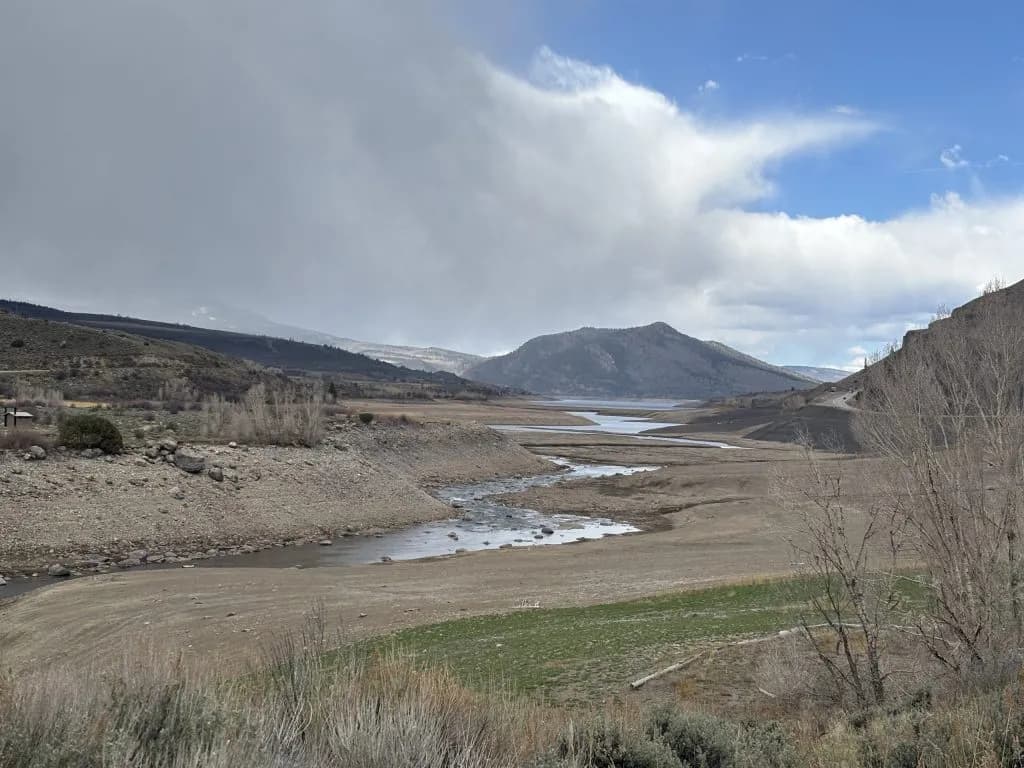
Steamboat Springs —“The we are on the extreme end of things,” Cody Moser said, his voice steady but carrying the weight of a basin that has been holding its breath for decades. He was speaking during a water briefing on Tuesday, April 7, addressing the hydrologists, the farmers, and the folks who wake up wondering if the tap will run tomorrow. The cause was a heatwave that didn’t just warm the air but actively dismantled the snowpack, stripping away the white blanket that usually sustains the West through the dry months.
It was an “astonishing” melt, driven by the warmest March on record across the Southwest, a month that shattered temperature records and left the Colorado River Basin gasping. The latest models, cold and unfeeling in their precision, now project that the main stem will deliver only about 1.4 million acre-feet of water to Lake Powell. That is roughly one-fifth of normal. If those projections hold, it will be the third lowest amount of water delivered to the nation’s second-largest reservoir in its 63-year history.
Lake Powell is currently sitting at just 23% full, a number that feels less like a statistic and more like a warning flare. The U.S. Bureau of Reclamation describes the lake as a “bank account,” a place where Lower Basin states draw during dry years and Upper Basin states add after using their share. But the account is overdrawn, and the interest rates are rising. The entire basin has been grappling with ongoing shortages, a crisis that has now reached a critical junction. Earlier this year, the seven states and two countries that share the river failed to reach an agreement on how to manage the dwindling supply by a crucial deadline. That failure kicked the question of survival straight to the federal government, leaving locals to wonder which level of authority will hold the purse strings next.
You can feel the tension in the air, thick and dry. The snowpack across the basin was already low at the start of March, raising concerns of an early start to what could be a dangerous fire season. Then came the heat. Nearly all the crucial areas for spring runoff had less than 50% of average precipitation in March, and less than half on average since October. The heatwave moved through, melting the snow in the most vital zones, stripping the landscape of its reserve.
This isn’t just a local issue for Delta County or Grand Junction; it’s a regional nerve ending. The waterway serves 40 million people, stretching from the Rockies to the sea. The warmth of this past March was hotter than 90% of past Aprils, setting 227 new monthly high temperature records across the state. Scientists with World Weather Attribution have determined that this heatwave would have been “virtually impossible” without human-caused climate change, driven by the burning of fossil fuels. It’s a fact that sits heavy in the chest, a reminder that the weather we’re experiencing is no longer just weather — it’s a structural shift.
The map of the Colorado River Basin tells a stark story, with dozens of snow telemetry sites recording the lowest snowpack on record at the start of April 2026. The snow is gone, melted away by a sun that feels too strong, too early. The river is shrinking, the lake is dropping, and the bank account is emptying. You can almost hear the water rushing through the turbines, a sound that is becoming quieter with each passing season.
Keep up with Steamboat Springs
The day's Western Slope news, one email each morning. Free.