Roaring Fork Valley Homes Harden as Exceptional Drought Raises Wildfire Risk
Record-breaking low snowpack and exceptional drought drive elevated wildfire risk across the Roaring Fork Valley, prompting locals to focus on hardening homes while the state prepares resources.
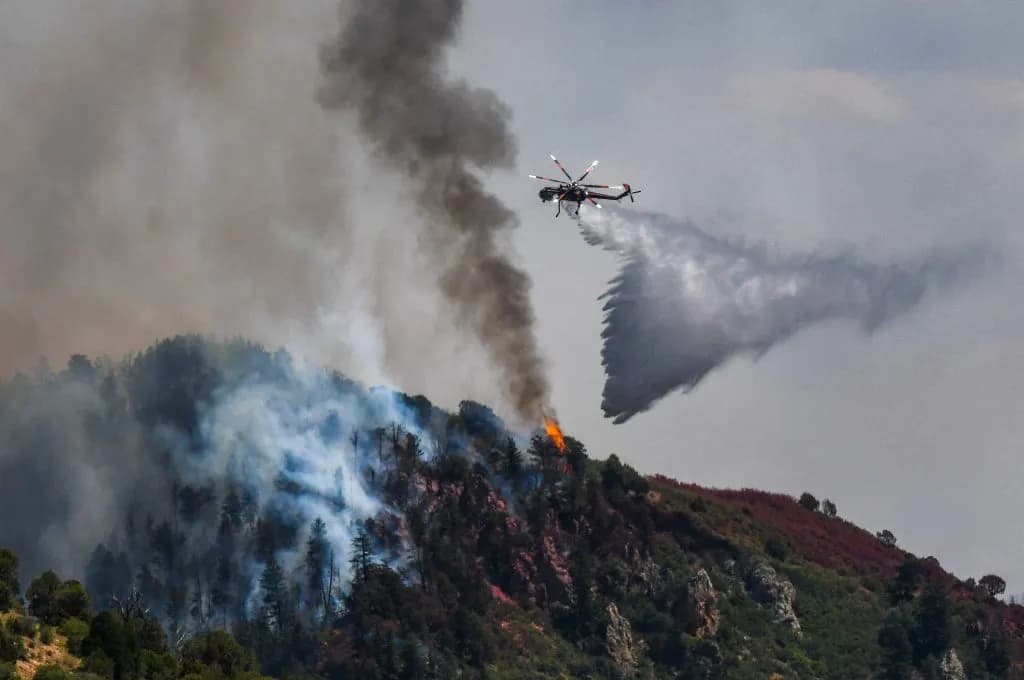
Glenwood Springs —“We are facing a very challenging fire year, where our resources will be tested across not only Colorado, but across the West.”
That’s Michael Morgan, head of the Colorado Division of Fire Prevention and Control, telling Governor Jared Polis on April 30. He wasn’t sugarcoating it. He was standing in a hangar in Broomfield, looking at maps that show 100% of Colorado in drought.
Let’s look at the numbers. Nearly all of Summit, Grand, Lake, Pitkin, Eagle, Routt, and Jackson counties are sitting in "exceptional drought." That’s the highest level. For folks in the Roaring Fork Valley, that means your water rights might still be there, but the fuel for a fire is dry as bone.
The National Weather Service’s Erin Walter put it plainly: record-breaking low snowpack combined with record-breaking high temperatures. It’s a bad mix. The National Interagency Fire Center predicts above-normal wildfire risk across the Western Slope for June and July. That’s not a forecast; that’s a warning label.
Governor Polis says we’re “better prepared than we’ve ever been.” He points to a decade of investment. The state bought its own multi-mission aircraft. They’ve got resources. They’re ready. But Stan Hilkey, the state’s fire chief, cut through the optimism with a simple truth: “There will be big fires.”
Big fires don’t care about your preparedness budget. They care about wind, topography, and how dry your trees are.
In the valley, the response has been less about buying planes and more about hardening homes. The goal is stopping embers from jumping from the wildland into your living room. Jake Andersen, fire chief for the Aspen Fire Protection District, says the partnerships are incredible. They’re using new tech to predict fire behavior.
Angie Davlyn of the Roaring Fork Valley Wildfire Collaborative is betting on a specific model. It’s scientifically validated. It’s almost 90% accurate. It tells you exactly where fire moves from home to home. That’s not just data; that’s a map of where your property might burn.
But here’s the rub. The state is preparing for the response. The locals are preparing for the impact.
The state bought aircraft. The valley is updating fire resiliency codes. Pitkin County and Aspen already have baseline requirements for buffer zones and vegetation spacing. They’re trying to keep the fire out of the urban interface. It’s a defensive strategy. It’s smart. But it’s not a guarantee.
The Lee Fire last summer was the fifth largest in state history. It burned in northwestern Colorado. It reminded us that “prepared” doesn’t mean “immune.” The Marshall Fire destroyed over 1,000 homes in 2020. That was a different kind of fire, but it proved that even in good years, things can go wrong. This year, the odds are worse.
For context, consider the cost of that “exceptional drought” on the Western Slope. It’s not just about smoke. It’s about insurance premiums rising. It’s about the value of your land dropping if the fire risk is too high. It’s about the commute getting shut down because a single ignition blocks a highway.
Hilkey warned that resources will be tested. That means if a fire starts in Grand County, the crews might be pulled from Eagle County. The state is stretched. The resources are finite.
So, what does this mean for you?
It means the risk is elevated. It means the window for action is closing. The models are 90% accurate. That leaves a 10% chance they’re wrong. You don’t bet your house on a 10% error rate.
The state is ready. The valley is hardened. But the drought is real. And the fire season is coming.
Keep up with Glenwood Springs
The day's Western Slope news, one email each morning. Free.
Twin Lakes Releases 2,500 Acre-Feet to Save Upper Arkansas River

Glenwood Springs Resident Calls for Active Citizenship Amid AI Data Center Water Threats