Grand Junction Watches as State Rep Scott Bottoms Leads Governor Race
State Rep. Scott Bottoms takes the lead in the governor race, focusing on conservative values and government transparency, which may impact the Western Slope region.
Colorado —Snow-capped mountains loom over the Western Slope, a region where conservative values often reign supreme. In the town of Grand Junction, locals gather at the farmer's market, discussing the latest news — including the upcoming gubernatorial election. State Rep. Scott Bottoms, a Republican from Colorado Springs, has just secured the top spot on the primary ballot.
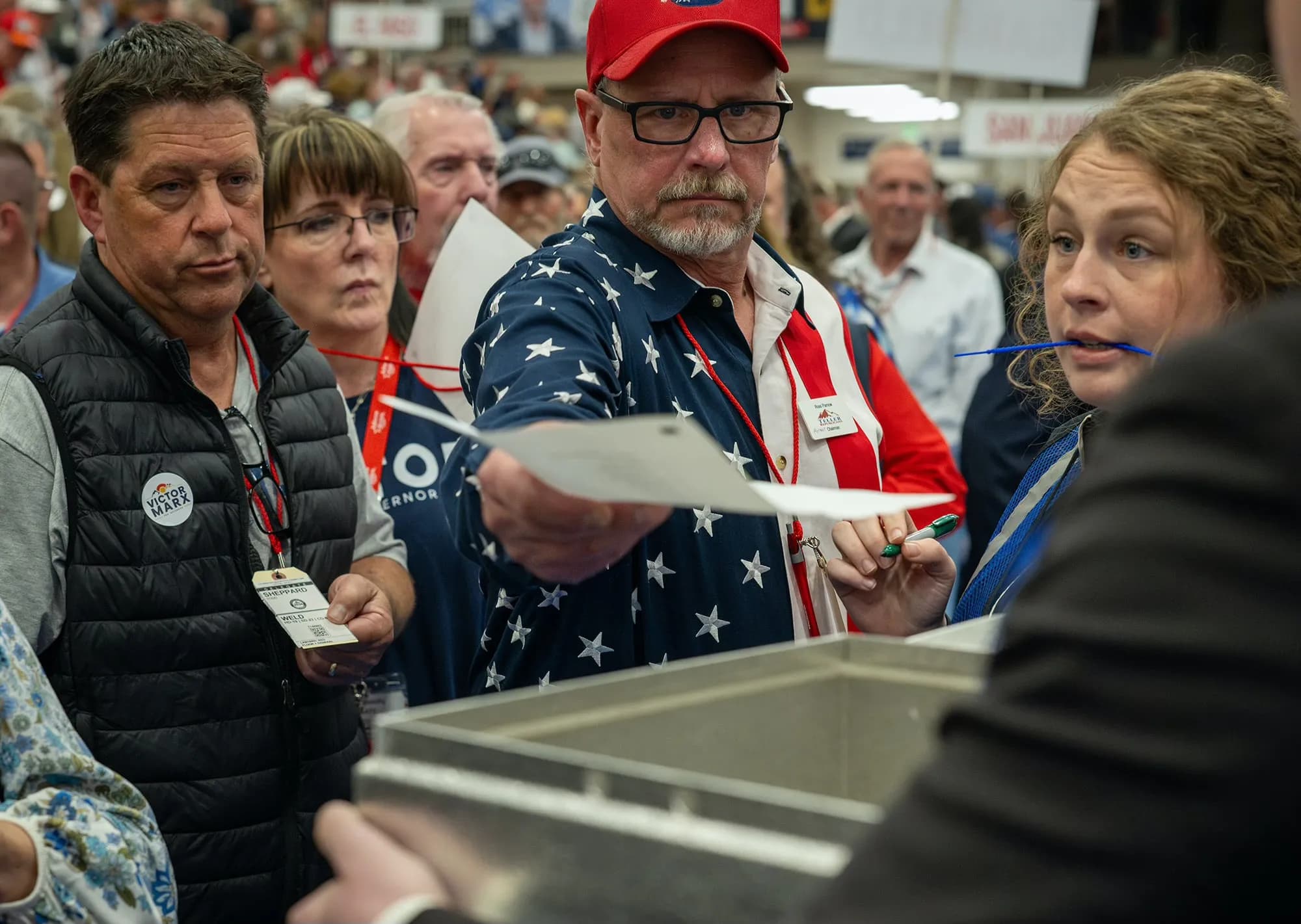
Bottoms won over 45% of the roughly 2,200 delegates at the state assembly in Pueblo. He will likely face state Sen. Barbara Kirkmeyer in the primary, along with evangelical pastor Victor Marx. Marx, a former Marine, secured the second spot with 39% of the vote.
Make no mistake, Bottoms' platform is rooted in conservative ideology. He has embraced election conspiracies, opposed efforts to protect and expand the rights of transgender people, and is a fierce opponent of abortion. His speech to delegates included promises to encourage government transparency, build nuclear reactors, and mine for lithium and uranium.
The short version: Bottoms wants to reclaim parenthood and childhood for all Coloradans, and plans to work with sheriffs and ICE to achieve his vision of safety and security. This will likely resonate with some voters on the Western Slope, where law and order tend to be highly valued. However, his stance on social issues may alienate others. Read that again: Colorado law bars sheriffs from entering into or renewing certain contracts with ICE related to immigrant detention. Bottoms' plan to work with ICE may put him at odds with state law. This is worth watching, as it could become a point of contention in the upcoming election.
In Delta County, where agriculture is a significant part of the economy, voters may be interested in Bottoms' plans for government transparency and economic development. The county spends around $1.5 million on economic development initiatives each year — a fraction of the state's overall budget. However, for locals, the impact of these initiatives can be substantial. The city of Montrose, with its growing population and increasing cost of living, may also be affected by Bottoms' policies. As the state's population continues to shift, the Western Slope's voice in the governor's office will be crucial.
One of the most pressing concerns for Western Slope voters is how the candidates will address the region's unique challenges. The fact that Bottoms and Marx will likely face state Sen. Barbara Kirkmeyer in the primary adds another layer of complexity to the election. Kirkmeyer submitted signatures instead of going through the assembly process, and her platform may appeal to a different segment of the Republican party. The upcoming election will be closely watched by voters on the Western Slope. As the candidates continue to campaign and debate, locals will be looking for substance over rhetoric. One question on everyone's mind: how will the next governor support the unique needs and challenges of this region?
Keep up with Colorado
The day's Western Slope news, one email each morning. Free.
Federal Report Sets 200,000 Acre-Foot Water Conservation Target for Upper Basin

Colorado Parks and Wildlife Deploys Precision Drones for Weed Control