Snyder Mesa Fire Closes Colorado River Boat Ramps in Grand Junction
The burning Snyder Mesa Fire forces immediate closure of key Colorado River boat ramps in Grand Junction, including Fruita and Loma, restricting public access to prevent hazards and aid firefighters.
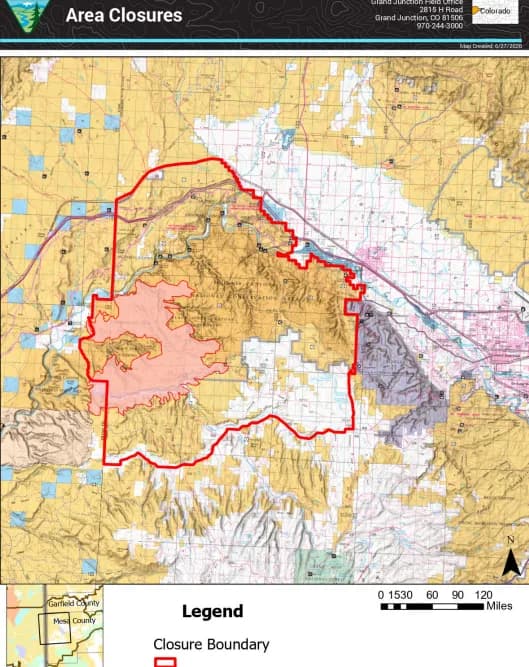
Grand Junction —"The cannot emphasize this enough: if you are floating the Colorado River, please end your trip at the Fruita boat ramp or a boat ramp farther upstream," said Travis Black, the Northwest Region Manager for Colorado Parks and Wildlife.
It’s a direct command, issued not just as a suggestion for leisure but as a critical safety measure for a region where the river is both a lifeline and a playground. As the Snyder Mesa Fire continues to burn west of Grand Junction, the landscape of Mesa County is shifting underfoot and beneath the water’s surface. The Bureau of Land Management and Colorado Parks and Wildlife have moved quickly to lock down access, turning familiar recreational spots into restricted zones to ensure that public and firefighter safety aren’t compromised by the blaze’s unpredictable expansion.
The closure orders are effective immediately, and they are sweeping. For the BLM, the mandate covers the entire McInnis Canyons National Conservation Area, a vast stretch of red rock and canyonland that locals know well. But the specific exclusion zone cuts a precise line through the terrain: north of DS Road and west of 16 1/2 Road. If you live in those neighborhoods, you’re likely watching the smoke drift over your property taxes and your morning coffee. The order stays in place until the fire is declared controlled or the order is rescinded, meaning your weekend hike could be delayed for days, or perhaps weeks, depending on how the wind shifts.
Violating the rule isn't a slap on the wrist. You face a fine of $1,000 and/or 12 months behind bars. It’s a significant penalty for a region where many folks are used to wandering freely across federal land. Federal, state, and local officers on duty, organized rescue members, and firefighters are exempt, as are those with written authorization from the BLM. Everyone else needs to stay out.
Down by the water, the restrictions are equally tight. CPW has closed public access to two state wildlife areas: Horsethief State Wildlife Area and Loma Boat Launch State Wildlife Area. These aren't just abstract points on a map; they are places where families launch kayaks and where anglers cast their lines into the current. The closure of the Loma Boat Launch cuts off easy access for those who rely on that specific entry point, forcing a detour or a complete change of plans.
Even more critical for the rafting community is the status of the Colorado River itself. The boat ramp at the Fruita section of James M. Robb-Colorado River State Park is now closed to all downstream traffic. This creates a logistical bottleneck for boaters, rafters, and floaters. If you launch downstream of Fruita, you’re stuck. There are no river takeout points between Fruita and the Utah state line, so you have to exit at or before the Fruita boat ramp. It’s a constraint that changes the entire dynamic of a day on the river, turning a long float into a shorter, more calculated trip.
Black’s warning underscores the dual purpose of these closures: protecting the public from the fire’s immediate dangers and protecting the firefighters who are working diligently on the ground. When the river is the only road in some areas, keeping it clear for emergency vehicles and crews becomes a matter of life and death.
As fire conditions continue to change, CPW indicated that further closures may be enacted. The situation is fluid, evolving with the smoke and the heat. For now, the message is clear: respect the boundaries, check the advisories, and don’t assume the trails you love are open just because the sign hasn’t been taken down yet. The air smells of pine and ash, and the river flows on, quieter now, waiting for the fire to settle before it welcomes its visitors back.
Keep up with Grand Junction
The day's Western Slope news, one email each morning. Free.

Canadian Tariffs Force Grand Junction Startup To Triple Bike Rack Price

Vail Musician James Carstensen Dies After Choosing Hospice Care