Steamboat's Walker Overstake Finds Speed After Missing Olympics by One-Hundredth of a Second
Steamboat 19-year-old Walker Overstake missed the Olympics by one-hundredth of a second, but the loss triggered a breakthrough season with World Cup podiums and Junior World silver medals by finding his flow.
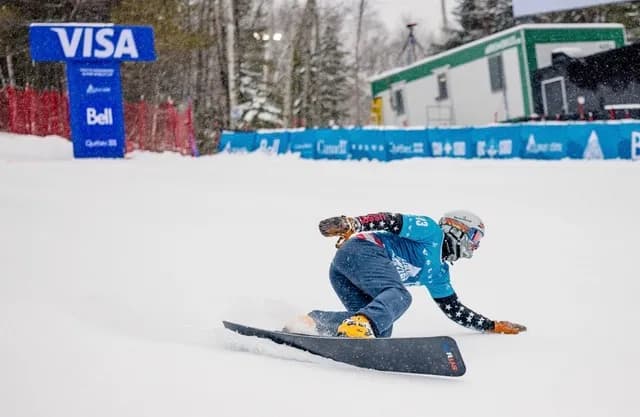
Steamboat Springs —Walker Overstake didn’t miss the Olympics by a landslide. He missed them by one-hundredth of a second.
That’s the margin of error that separates a life of gold-medal parades from a life of figuring out who you are when the spotlight turns off. For the 19-year-old Alpine snowboarder from Steamboat Springs, that tiny fraction of time was a curse. Then, it became a blessing.
The short version? Losing forced him to rediscover the sport.
Most athletes would have crumbled. Overstake went quiet. He spent three weeks suppressing emotions he didn’t quite understand. He needed to reset. So he did what any sensible local would do when the big dream dies in the cradle — he went to France. He didn’t race. He free-ridden. He just snowboarded.
And suddenly, the pressure vanished.
“I had nothing to lose or gain after the announcement,” Overstake said. “I had to let go and everything came together.”
Make no mistake: this isn’t a sob story about a kid who almost made it. This is a case study in how losing can be faster than winning.
Overstake tapped into what he calls a “flow-state.” A primal focus. You can’t find that if you’re carrying the weight of expectation. If he had made the team, he’d have been playing not to lose. Instead, he played to ride.
The results followed. Fast.
He broke out on the World Cup stage. On Jan. 24, he secured his first podium in parallel team giant slalom alongside Iris Pflum in Simonhoehe, Austria. By March 14, he was fourth in parallel giant slalom in Val St. Come, Canada. In that race, he knocked out Zan Kosir — a three-time Olympic medalist from Slovenia. You don’t beat a veteran like that by accident. You beat him by being loose.
His season peaked with three silver medals at the Junior World Championships in Folgaria, Italy. Parallel slalom. Parallel giant slalom. Team parallel slalom. All between March 27 and 29.
It’s funny to say, but I am super-grateful for the experience of losing, Overstake said. I was able to let my mind heal.
The coaching staff at the Steamboat Springs Winter Sports Club saw it coming. Head Snowboard Coach Alex Deibold told him early on: learn to lose before you learn to win. It sounds like cliché advice until you’re standing on a podium in Austria.
Then there’s Thedo Remmelink, the Alpine Snowboard Coach. Overstake says Remmelink is the definition of patience.
“The more patient you are, the faster you’ll go,” Remmelink says. “If you’re not patient, you’ll dump your speed.”
That’s not just a racing tip. It’s a life lesson for anyone in the valley trying to navigate a commute, a budget, or a career. Rush it, and you lose momentum. Wait for the line, and you fly.
Overstake’s goal hasn’t changed. He still wants the Olympic Games. But the path looks different now. He’s not chasing a timeline anymore. He’s chasing the ride.
“I’m just going to go out and snowboard, and take everything one run at a time,” he said. “Everything will come into place and I’m going to try and live in the moment.”
Read that again.
The local angle here isn’t just about one kid from Steamboat. It’s about how we measure success in a town obsessed with results. We stare at the podiums. We count the medals. We rarely glance at the three weeks of silence that came before them.
Overstake didn’t just lose by a hundredth of a second. He won by realizing that the destination was the problem.
He’s still 19. He’s still local. And he’s still faster than he was when he was trying too hard.
The question is whether the rest of us can slow down enough to see it.
Keep up with Steamboat Springs
The day's Western Slope news, one email each morning. Free.