Stillwater Ditch Crew Thins Forest to Protect Yampa Ranch Water
A hand crew thins overgrown forest above the Stillwater Ditch to reduce burn severity and protect water infrastructure for Yampa River ranches amid drought conditions.
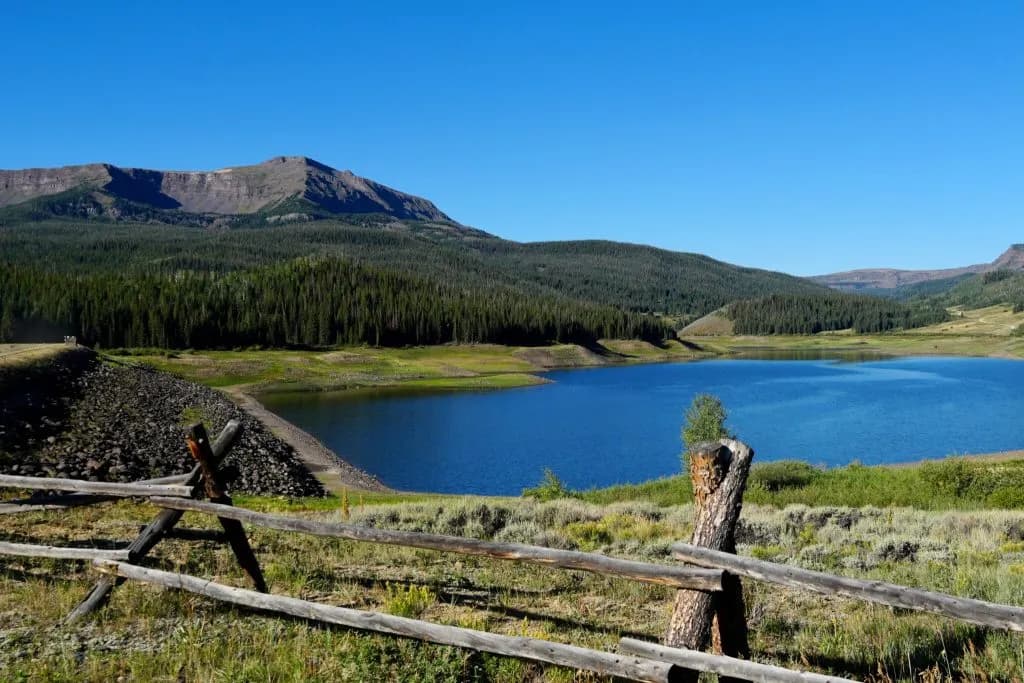
Steamboat Springs —The ditch cuts a jagged scar across the 9,000-foot-high mesa, a century-old vein of concrete and earth that snakes through the rugged terrain of the Routt National Forest. It’s a quiet, dusty place where the air smells of pine needles and dry earth, far removed from the frantic energy of a city council meeting or a town hall debate. But stand there long enough and you can hear the machinery.
For a month, a hand crew of 20 to 30 workers hiked up and down the slope above the Stillwater Ditch, wielding chainsaws and heavy equipment in grueling 12-hour shifts. They weren’t just clearing brush; they were trying to keep the water flowing for a dozen cattle ranches that rely on this specific stretch of the Yampa River basin to irrigate their hay meadows.
Andy Rossi, the general manager of the Upper Yampa Water Conservation District, remembers a simpler time for this forest. He used to play a game with his crew when he first started working the ditch. They’d take their lunch breaks and try to walk through the woods without touching the ground.
“We used to play a game when I first started working here, and we’d come up and work on the ditch on our lunch breaks: How far can you walk through the forest without touching the ground?” Rossi told reporters during a tour of the project site this week. “Because there was so much deadfall and it was so thick.”
That thickness is the problem. And it’s a problem that extends far beyond this single ridge near Yampa.
The state of Colorado is trying to protect its water supply from the twin threats of wildfire and a warming climate, but the scale of the threat is vastly outpacing the money available to fight it. The Stillwater Ditch project, funded by a state grant program but situated on national forest land, is a microcosm of a statewide struggle. The work was carefully timed — delayed until July 1 to avoid disrupting elk-calving season — and restricted to avoid buffer zones around eagle nests. It was precise. It was methodical. It was also just one small piece of a much larger, underfunded puzzle.
The goal here isn’t to stop fires altogether. That’s a losing battle in a changing climate. The objective is to reduce burn severity. If a high-severity fire sweeps through this overgrown subalpine fir forest, it could strip the vegetation that holds the soil together. The result? Floods, debris flows, and contaminated water. If a major debris flow were to damage the Stillwater Ditch, Rossi said, it could take years to fix.
“If thousands of acres of ranch land are out of business for one, two, three seasons, they’re done,” Rossi said.
The logic is brutal in its simplicity. A fire that burns too hot doesn’t just kill trees; it kills the economic engine of the region. The treated trees were delimbed and cut down according to specific criteria, favoring aspen and Engelman spruce over the less fire-resilient subalpine fir. The cut limbs were piled into “slash piles” to dry out for at least a year before being safely burned in the winter. It’s a tedious, expensive process. And it’s happening in pockets across the state, funded by grants that are running thin relative to the acres that need treatment.
This summer, the Upper Yampa district faced severe cuts to water allotments amid unprecedented drought conditions. The ditch was running low, the hay was struggling, and the forest above it was primed to burn. The hand crew worked through the heat, thinning the forest to ensure that when the next fire comes, and it will come - it might be a low-severity event that clears the understory rather than a high-severity inferno that buries the infrastructure under feet of mud and rock.
It’s a race between the money in the grant program and the acres on the ground. Right now, the acres are winning.
Keep up with Steamboat Springs
The day's Western Slope news, one email each morning. Free.