Supreme Court Weakens Voting Rights Act Provision
The Supreme Court has weakened a key provision of the Voting Rights Act, sparking concerns about minority representation in Congress and the potential for discriminatory voting practices.
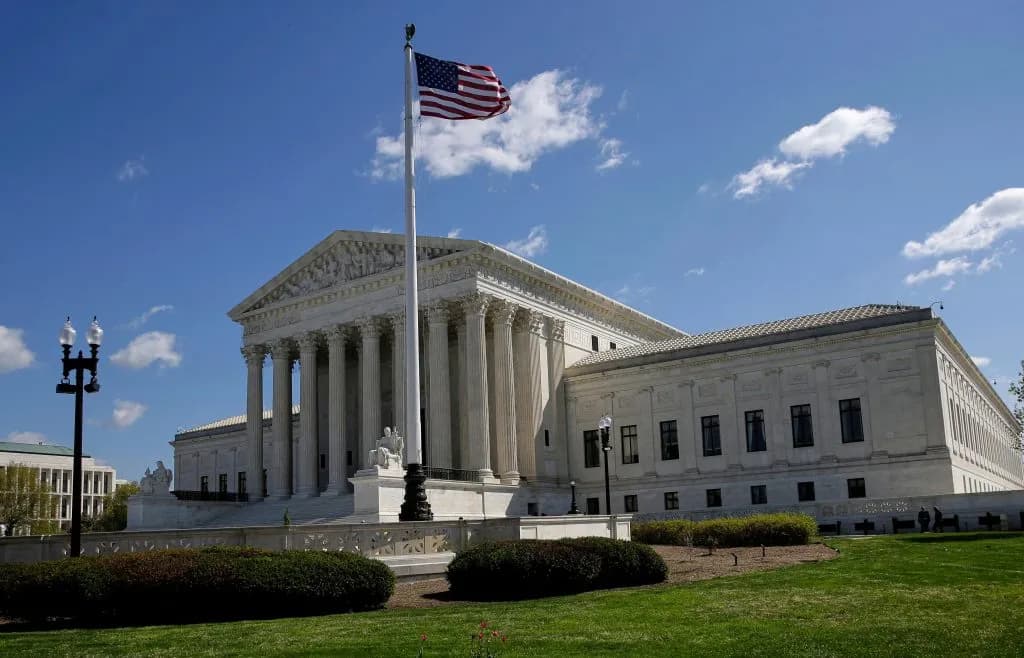
Aspen —The sun rises over the Colorado National Monument, casting a warm glow over the rugged landscape. Folks around here are sipping their coffee, scanning the headlines, and wondering what the latest Supreme Court decision means for their community. The court's ruling on a landmark Civil Rights-era law is making waves, and locals are trying to make sense of it.
The Supreme Court has weakened a key provision of the Voting Rights Act of 1965, striking down a majority Black congressional district in Louisiana. This decision has significant implications for minority representation in Congress and could aid Republican efforts to control the House. The court's conservative majority found that the Louisiana district relied too heavily on race, with Chief Justice John Roberts describing the district as a "snake" that stretches over 200 miles to link parts of several cities. Justice Samuel Alito wrote that "allowing race to play any part in government decisionmaking represents a departure from the constitutional rule that applies in almost every other context."
Not exactly what you'd call a straightforward ruling, given the complexities of the Voting Rights Act. The law was signed into effect by President Lyndon Johnson over 60 years ago, and it's been a crucial tool for challenging racially discriminatory election practices. Johnson called it "a triumph for freedom as huge as any victory on any battlefield." Now, the court's decision has many wondering what's left of the law's protections.
Here's the thing though: the impact of this ruling won't be felt immediately, at least not in this year's congressional races. Most filing deadlines have passed, so the effects will likely be more pronounced in 2028. Louisiana, however, may need to revisit its redistricting plan to comply with the decision. The state will have to navigate the new landscape, and that matters because it could set a precedent for other states.
Picture this: nearly 70 of the 435 congressional districts are protected by the provision that was just weakened. That's a significant number, and it's not hard to see why this decision has many people concerned. Election law expert Nicholas Stephanopoulos has estimated that the law has been instrumental in reducing discrimination in voting and opening the ballot box to Black Americans.
Justice Elena Kagan, in her dissent, wrote that the court's "gutting of Section 2 puts that achievement in peril." Her sentiment was echoed by former President Barack Obama, who said the decision shows "how a majority of the current Court seems intent on abandoning its vital role in ensuring equal participation in our democracy." Democrat Cleo Fields, whose district was struck down, stated that the decision's "practical effect is to make it far harder for minority communities to challenge redistricting maps that dilute their political voice."
The reaction to the decision has been predictably partisan, with White House spokeswoman Abigail Jackson commending the court for "putting an end to the unconstitutional abuse of the Voting Rights Act and protecting civil rights." On the other side, many are worried that this decision will lead to a decrease in minority representation and an increase in discriminatory voting practices.
As the community around the Colorado National Monument continues to discuss and debate the implications of this ruling, the effects will be far-reaching, and the future of representation in their community is uncertain.
The sun is now high overhead, casting a stark light on the landscape. Folks are still talking, still trying to make sense of it all. The only sound is the wind rustling through the trees, a reminder that some things remain unchanged, even as the political landscape shifts.
Keep up with Aspen
The day's Western Slope news, one email each morning. Free.


S&P 500 Slips Modestly as Weak Retail Sales and Oil Prices Drive Market Correction

Aspen Essay Connects Generations Through Highway 82 Landmarks