U.K. General Says 500,000 Russian Troops Have Died in Ukraine
Britain’s top military officer stated in Kyiv that over 500,000 Russian troops have died in Ukraine, alongside massive equipment losses. The figures highlight the slowing Russian advance and intensifying air raids.
Aspen —The number is so large it stops feeling like a count of human beings and starts feeling like a weather event. More than 500,000 Russian troops have died in Ukraine since the full-scale invasion began in February 2022. That is the figure given by Air Chief Marshall Sir Richard Knighton, Chief of the U.K.’s Defense Staff, speaking Friday in Kyiv.
To hear him tell it, the toll is not just in blood but in iron. Knighton described the loss of military materiel as "enormous." He provided a breakdown that reads less like a casualty list and more like an inventory of a destroyed fleet: over 10,000 armored and protected vehicles, nearly 3,000 air defense and artillery systems, and more than 370 aircraft and helicopters.
These U.K. figures roughly coincide with those published by the Ukrainian military. What is missing is the other side of the ledger. Knighton did not specify Ukraine’s losses. Neither Moscow nor Kyiv provides regular updates on battlefield casualties, leaving the true cost of the war shrouded in fog.
The strategic implication is stark. Despite possessing a larger army, Russia is struggling to make headway. Western officials and analysts note that the Russian rate of advance has slowed significantly this year. The math holds up: you cannot sustain a grinding war of attrition when your replacement rate lags behind your loss rate.
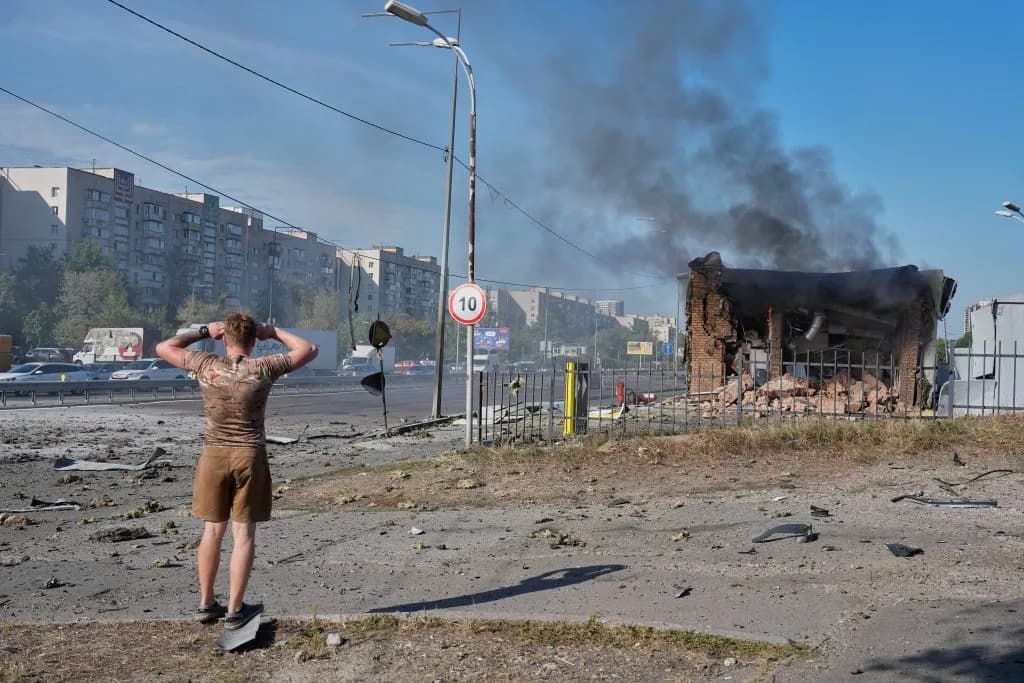
Meanwhile, the air war continues to broaden. Russian drones targeted roadside gas stations in Kyiv for a second straight day, killing two people and wounding six. Ukrainian Foreign Minister Andrii Sybiha said on X that Russia is "systematically attacking places where it knows people will be spending their time going about their daily lives, seeking to maximize casualties, spread fear, and put pressure on Ukrainian society."
In central Ukraine, the city of Pavlohrad observed an official day of mourning for five residents killed near shopping malls by Russian drones. In Zaporizhzhia, a 32-year-old woman and her 10-year-old son were wounded when drones struck a nine-story apartment block and a shopping mall.
As the invasion stretches into its fifth year, Ukraine is urgently trying to improve its air defenses. On Thursday, the country won pledges of more support from Canada. But the question is whether diplomatic backing can keep pace with the kinetic reality on the ground.
Knighton’s assessment suggests that while the battlefield may be static, the economic and logistical bleed is accelerating. For neighbors watching the conflict from afar, the reality is that scale changes the nature of the fight. It is no longer just about territory; it is about endurance.
When pressed on the outlook, Knighton’s demeanor remained measured. He acknowledged the resilience of the Ukrainian forces but pointed to the sheer volume of resources required to maintain the current defensive posture.
The final word belongs to the man who spent his career counting the cost of war. As he left the press conference in Kyiv, surrounded by the hum of generators and the distant whistle of air raid sirens, he offered a brief reflection on the state of the conflict.
"The numbers are brutal, but they are honest," Knighton said. "And in a war that often feels anything but transparent, honesty is a rare commodity."
Keep up with Aspen
The day's Western Slope news, one email each morning. Free.