Colorado Sees Record Early Spring Due to Heatwave
The Colorado Rocky Mountains are experiencing a record-breaking heatwave, leading to an unusually early spring with significant consequences for the environment, wildlife, and local communities.
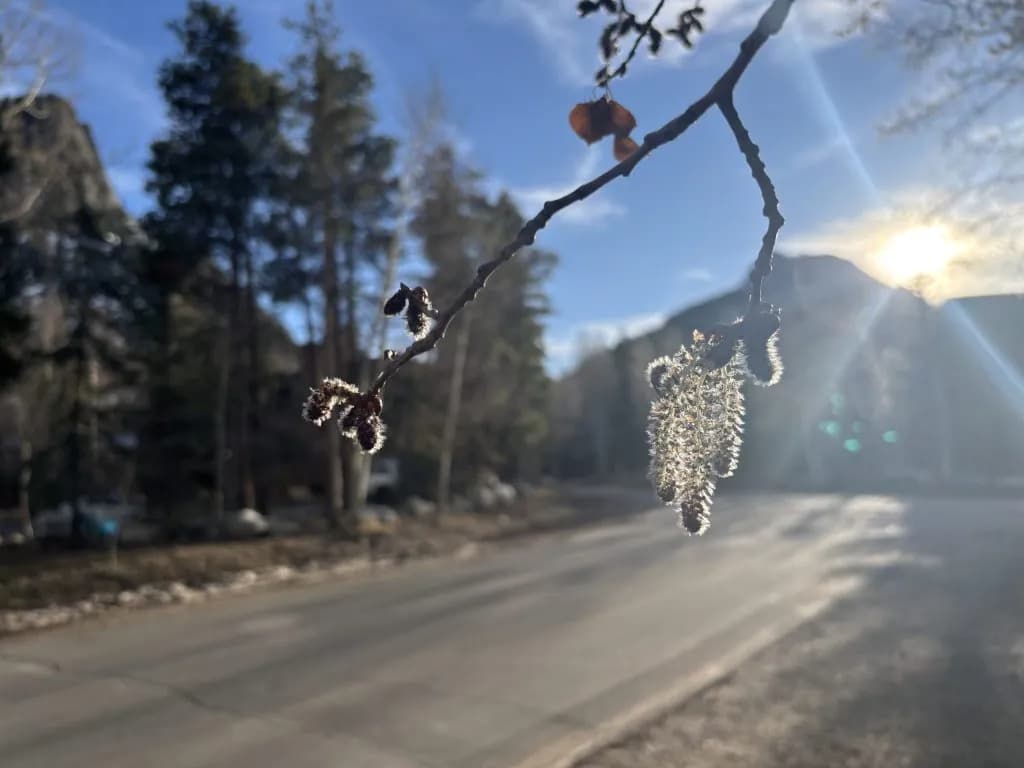
Glenwood Springs —Kamie Long, Colorado State Forest Service Western Slope Urban and Community Forestry Specialist, expects everything to start breaking dormancy earlier than normal — warm temperatures are driving this change. Long's statement is straightforward — no sugarcoating. The Colorado Rocky Mountains are seeing record-high temperatures, melting snow, and prompting trees and flowers to bud ahead of schedule.
In Frisco, 9,097 feet above sea level, March is usually one of the snowiest months. Not this year. The ground is mostly bare of snow, aspen trees are budding, and pasque flowers are popping out of the ground. Lower elevations in Glenwood Springs are seeing cherry blossoms bloom and green leaves sprout from trees. This is four weeks early, a significant deviation from the norm.
Colorado is in the midst of a record-breaking heatwave, trapped under a ridge of high pressure known as a heat dome. The USA National Phenology Network reports spring is coming up between seven and 30 days earlier than average across the mountain West. Phenology Network Director Theresa Crimmins notes that while multiple factors can impact the timing of plants' and animals' spring responses, temperature is usually the biggest driver. Crimmins explains phenology; the study of when stuff happens seasonally in plants and animals. This includes plants budding out, insects emerging from overwintering, and migratory birds arriving. Recent local environmental conditions heavily influence the timing of these events, with temperature playing a huge role in shaping when they happen. Crimmins says springtime phenological transitions typically occur when enough warmth has been accumulated - calculated in "growing degree days." As of March 25, Frisco recorded 99 growing degree days, compared to the 30-year average of 19. That's almost five times the accumulated warmth than normal for this time of year. Steamboat Springs, Vail, and Aspen show similar trends. The numbers are clear. our spring is coming in hot, and we're not prepared. The impact of this early spring will have significant consequences for our water supply, our wildlife, and our economy. These are questions that need answers.
The short version: our spring is coming in hot, and we're not prepared. In our community, this early spring will have real consequences. Warmer temperatures and changing precipitation patterns will impact our agriculture, our recreation, and our daily lives. The USA National Phenology Network's map shows huge swathes of the country seeing an early spring this year. This is a regional issue, with far-reaching implications. Theresa Crimmins' statement - "It just went bananas. It just sky rocketed" - is telling. The accumulated warmth across the mountains since the heatwave kicked off is unprecedented. A sudden shift like this raises concerns about the future. The numbers are clear, the trends are evident, and the consequences are real. This early spring will change our community, our environment, and our way of life. Read that again; the facts are stark. The implications are complex. We will be watching this story closely, and we will be asking the hard questions. Worth watching - how our community responds to this new reality.
Keep up with Glenwood Springs
The day's Western Slope news, one email each morning. Free.

Lauren Boebert's Son Clears Bond Amid Carbondale Curriculum Debate
Twin Lakes Releases 2,500 Acre-Feet to Save Upper Arkansas River