U.S. Forest Service completes 100-acre prescribed burn south of Steamboat
The U.S. Forest Service completed a strategic 100-acre prescribed burn south of U.S. Highway 40 in the Harrison Creek drainage, part of the broader Steamboat Front Hazardous Fuel Reduction Project aimed at lowering wildfire risk for local residents.
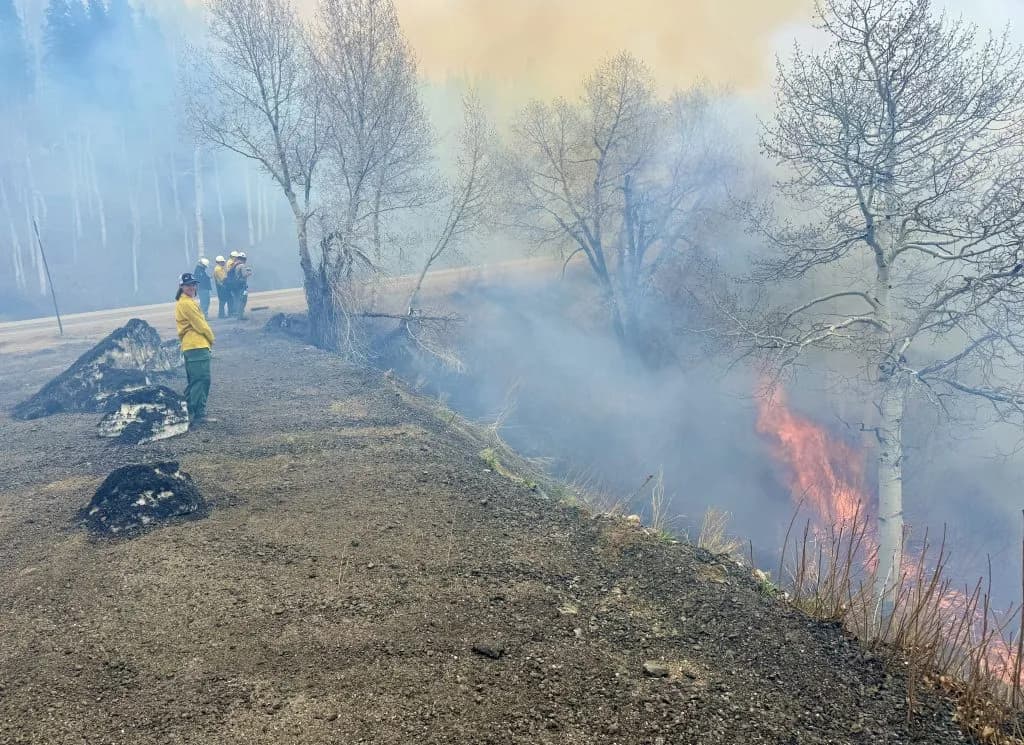
Steamboat Springs —The air south of U.S. Highway 40 still holds the faint, sweet scent of cured pine and damp earth, a sensory echo of the flames that swept through the Harrison Creek drainage last month. It is a smell that feels ancient and necessary, rising from the western edge of the Rabbit Ears Pass where the forest thickens and the wildland urban interface begins its quiet, persistent creep toward our driveways. For the residents of Steamboat Springs, this isn't just a forestry report; it is a proactive measure taken by the U.S. Forest Service to manage the overgrown vegetation that threatens to choke the landscape.
More than 100 acres of prescribed burn were completed on March 23, a strategic application of fire to reduce wildfire risk within this critical zone. The work was part of the Steamboat Front Hazardous Fuel Reduction Project, a multi-year effort designed to tackle the very real threat of high-intensity wildfires in the area south of town. Aaron Voos, the Forest Service public affairs specialist, explained that while the total burn unit footprint spans 200 acres, they focused on approximately 100 acres in a mosaic pattern. This is not a blanket burn that consumes everything; it is a calculated selection, a patchwork that leaves some areas intact while clearing others, a method Voos noted is "very typical and often desired" to ensure the resulting burn does not overwhelm the ecosystem.
You can feel the intention in the landscape. The burn units rely on the lingering snow bordering the area to serve as a natural holding line, keeping the fire contained while it does its work. This recent activity is follow-up to a successful treatment of approximately 300 acres in the same vicinity earlier in 2025, a continuity of care that suggests a long-term commitment to the health of the forest. It’s a collaboration that extends beyond the Forest Service, involving officials from Colorado Parks and Wildlife, the Colorado Department of Transportation, and the Routt County Wildfire Mitigation Council, all working to ensure that the roads we commute on and the wildlife we share our home with remain safe.
Halie Cunningham, program manager for the nonprofit Wildfire Mitigation Council, put it simply: this is about restoring the natural balance of our fire-adapted landscape. It’s about more than just clearing brush; it’s about creating resilient, fire-adapted communities through coordinated efforts. Michael Woodbridge, the Forest Service District Ranger, highlighted three primary benefits of the Steamboat Front project: protection of evacuation routes, enhancement of wildlife corridors, and improved public safety. By proactively managing fuels today, they are significantly reducing the potential for high-intensity, uncontrollable wildfires tomorrow.
If you look closely at the terrain south of Harrison Creek, you’ll see the evidence of that management. The fire creates strategic fuel breaks that lower the intensity of future fires, providing firefighters a safer environment to manage future events. It is a delicate balance, one that requires patience and precision. And while the smoke has cleared, the community is still engaging with the aftermath. The Routt County Wildfire Mitigation Council is hosting a public education evening this Thursday at the Bud Werner Memorial Library, where locals can learn more about protecting their homes. They will watch the PBS episode “Weathered: Inside the LA Firestorm,” an award-winning documentary on the 2025 wildfire, and discuss solutions available to mitigate danger in Routt County.
The work doesn't stop with the burn. It continues in the planning meetings, the community outreach, and the quiet observation of the forest floor. As the snow melts and the new growth begins, the landscape looks different — scarred, yes, but also prepared. The air is clearer, the fuel load is lighter, and the path forward, both for the fire and for the people who live here, feels a little less uncertain.
Keep up with Steamboat Springs
The day's Western Slope news, one email each morning. Free.