U.S. Forest Service Moves Headquarters to Salt Lake City Amid Record-Low Snowpack Fears
The U.S. Forest Service is shifting its headquarters to Salt Lake City and closing regional offices, raising concerns among locals and officials like Sen. Michael Bennet about wildfire readiness during record-low snowpack.
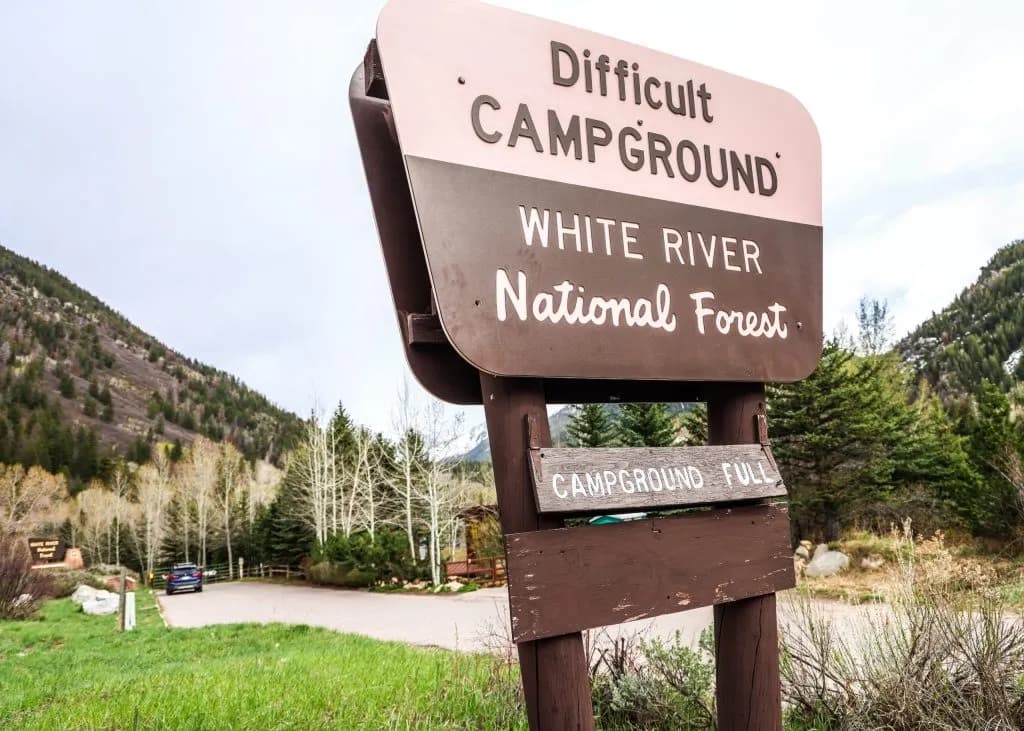
Glenwood Springs —The U.S. Forest Service is moving its headquarters from Washington, D.C., to Salt Lake City. It’s also closing all ten regional offices. On paper, that sounds like a logistical shuffle. In practice, it’s a restructuring that locals have every right to worry about, especially with record-low snowpack sitting in the mountains right now.
Scott Fitzwilliams spent 35 years in the agency. Fifteen of those years he ran the White River National Forest, which happens to be the country’s most-visited national forest. He knows how the bureaucracy actually works. He knows where the money goes. And he’s skeptical.
“There was probably nobody that worked under the agency that was a bigger proponent of streamlining at the headquarters level. We got too big,” Fitzwilliams said. “But, if the purpose (of the reorganization) is to get more resources to the ground, let’s see it. Because, right now, nobody is seeing that.”
That’s the core tension. Forest Service Chief Tom Schultz claims the new structure will make the agency more “nimble, efficient, effective and closer to the forests and communities it services.” Closer is a relative term when you’re moving the center of gravity from the East Coast to Utah and a handful of other hubs. The plan closes more than 50 research centers and consolidates them into a single organization in Fort Collins.
Let’s look at the scale. We’re talking about an agency that manages 193 million acres. That’s a vast expanse of timber, infrastructure, and fire risk. The West is facing record-low snowpack conditions. That’s not a forecast; that’s current data. A dangerous wildfire season is imminent.
U.S. Sen. Michael Bennet, D-Colorado, isn’t taking chances with the timing. “We are about to see a potentially catastrophic wildfire season, and this reorganization cannot distract from the work ahead,” Bennet said in a statement. He argued the agency “should be focused on forest health, managing our public lands and responding to local community needs.”
It’s easy to dismiss these concerns as political noise. But consider the context of the Department of Government Efficiency, or DOGE. The Trump administration established this body last year to slash tens of thousands of federal workers. They cut an estimated 3,400 jobs at the Forest Service alone. The stated goal was reducing bureaucratic “bloat.”
The administration promised those layoffs wouldn’t impact wildfire operations. They later admitted that wasn’t entirely true. Now, they’re shuffling the deck chairs while the ship is already listing. The move to a “state-based organizational model” means closing regional offices in places like Fort Collins, Albuquerque, Athens, Madison, Missouata, and Placerville.
For folks around here, the question isn’t whether the bureaucracy is bloated. It’s whether the people holding the hoses and mapping the burn zones are still there. Fitzwilliams put it bluntly: if the goal is getting resources to the ground, the proof isn’t in the press release. It’s in the field. Right now, nobody is seeing it.
The bottom line is simple. You’re getting a new management structure for 193 million acres. You’re getting fewer research centers. You’re getting a workforce that was already trimmed by thousands. And you’re getting it right before the dry season hits hard. If the reorganization doesn’t put more bodies on the ground, it’s just a change of address for the people writing the checks.
Keep up with Glenwood Springs
The day's Western Slope news, one email each morning. Free.
Twin Lakes Releases 2,500 Acre-Feet to Save Upper Arkansas River

Glenwood Springs Resident Calls for Active Citizenship Amid AI Data Center Water Threats