US and Iran Hold Historic Talks Amid Ongoing Conflict
The US and Iran engage in rare face-to-face talks in Pakistan, seeking a resolution to the ongoing conflict that has impacted global markets and energy prices.
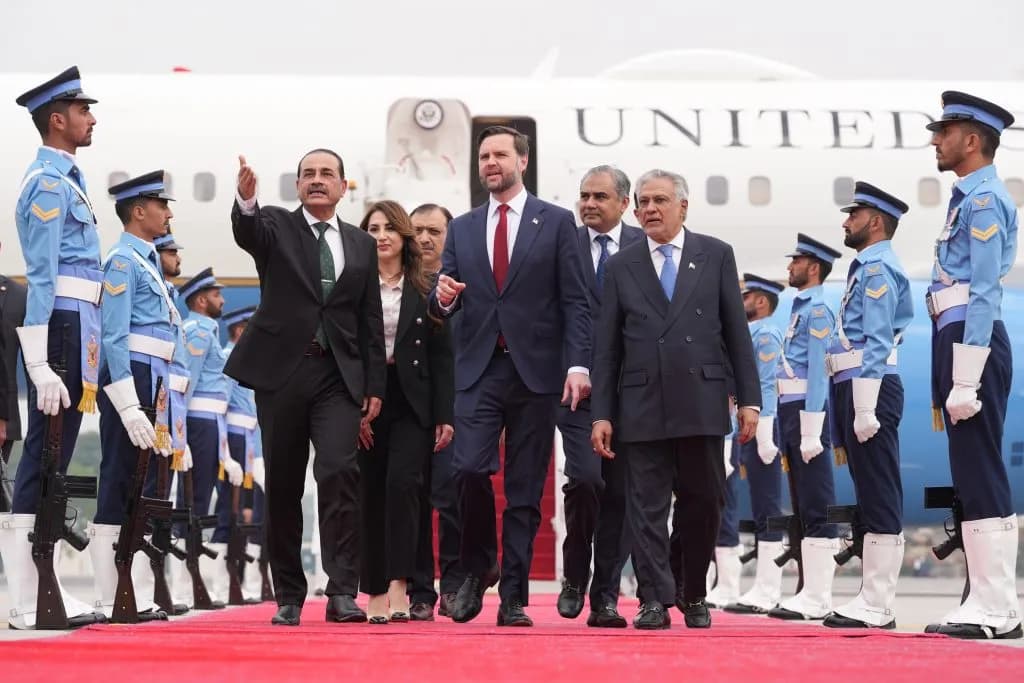
Vail —"I'm skeptical yet hopeful" — that's what a Tehran resident told the Associated Press after weeks of airstrikes left destruction across their country. The comment comes as the US and Iran hold historic face-to-face negotiations in Pakistan, days after a fragile, two-week ceasefire was announced. Make no mistake, this is a significant development in a war that has killed thousands of people and shaken global markets.
The talks, led by Vice President JD Vance and Iranian Parliament Speaker Mohammad Bagher Qalibaf, are a rare instance of high-level engagement between the two countries. The US delegation is discussing with Pakistan how to advance the ceasefire, already threatened by deep disagreements and Israel's continued attacks against the Iranian-backed Hezbollah in Lebanon. The death toll in Lebanon has surpassed 2,000, according to the health ministry.
The war has had far-reaching consequences, including a significant impact on global energy prices. Iran's grip on the Strait of Hormuz has largely cut off the Persian Gulf and its oil and gas exports from the global economy, sending energy prices soaring. For folks around here, that means higher prices at the pump — a reality that's all too familiar in the Western Slope, where commutes can be long and gas prices are always a concern.
The US military has also been active in the region, with two destroyers transiting the Iran-gripped Strait of Hormuz ahead of mine-clearing work. However, Iran's state media denied this, citing a joint military command statement. The discrepancy highlights the complexities and challenges of the situation.
Iran has set "red lines" for the talks, including compensation for damage caused by US-Israeli strikes and the release of frozen assets. The country's delegation presented these conditions to Pakistani Prime Minister Shehbaz Sharif, and these demands will be a major point of contention.
The impact of the war on the Middle East is undeniable, with at least 3,000 people killed in Iran, 2,020 in Lebanon, 23 in Israel, and more than a dozen in Gulf Arab states. The destruction of infrastructure in the region has also had a lasting impact on the global economy.
As the talks continue, officials from the region, including Chinese, Egyptian, Saudi, and Qatari officials, are in Islamabad to indirectly facilitate the discussions. The presence of these officials highlights the high stakes and the international community's interest in finding a resolution to the conflict.
For people in the valley, the question is what this means for our community. Will the ceasefire hold, and will the talks lead to a lasting peace? The short version is that it's too early to tell, but the fact that these negotiations are happening is a glimmer of hope in an otherwise dire situation.
The fact that Vice President Vance, a reluctant defender of the war, is leading the delegation, raises questions about the administration's approach to the conflict. Vance has warned Iran not to "try and play us," but it's unclear what this means in practice. Meanwhile, Qalibaf, a former commander with Iran's powerful Revolutionary Guard, has issued some of Iran's most fiery statements since the fighting began.
As the situation develops, it's worth watching how the negotiations progress and what concessions, if any, will be made. The fact that Iran has set "red lines" and is seeking compensation for damages suggests that the country is looking for significant commitments. Read that again, the US is being asked to compensate Iran for damages, a demand that's unlikely to be met without significant concessions from the other side.
One outcome of these talks will have far-reaching consequences, not just for the Middle East but for the global economy and, by extension, our local community. One possibility is that the status quo is unsustainable, and a resolution to the conflict is necessary, the details of that resolution will impact our daily lives here on the Western Slope.
Keep up with Vail
The day's Western Slope news, one email each morning. Free.