Vail Trucks Fined for Missing Chains Despite Clear September Skies
Two commercial trucks near Vail received citations for missing chains during clear September weather, highlighting strict enforcement of Colorado’s seasonal must-carry rule on I-70.
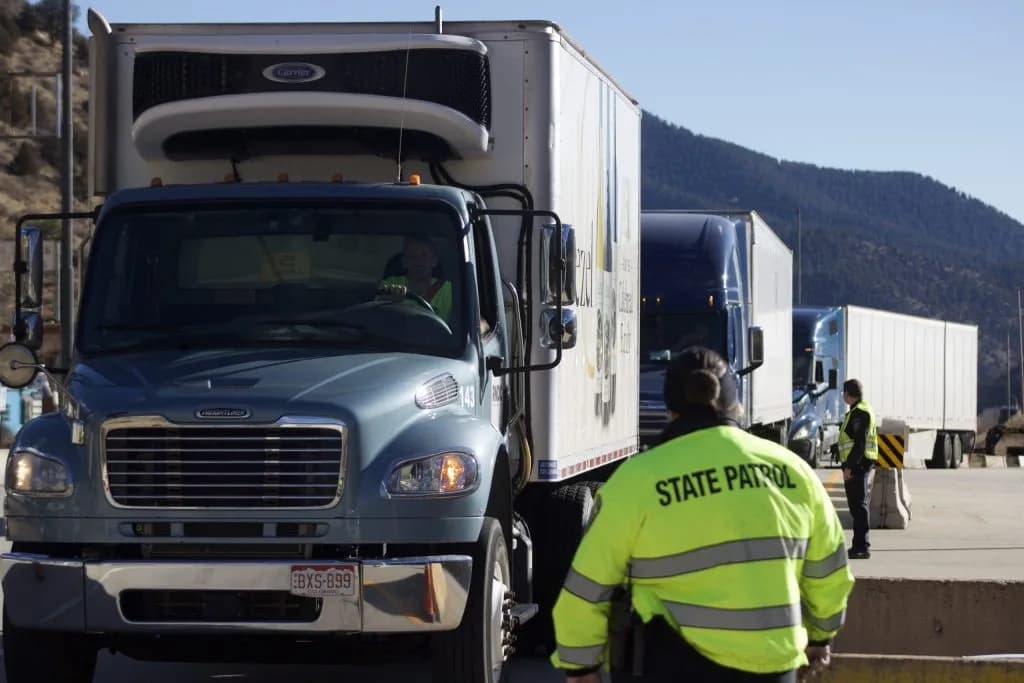
Aspen —The wind cuts through the gap between the mountains, sharp and cold, even though the calendar still reads September. Down below, on the asphalt of Interstate 70, a commercial truck pulls over. The driver steps out, checks his mirrors, and waits. He isn’t waiting for snow. He’s waiting for a citation.
It sounds premature. It feels aggressive. But the Colorado State Patrol doesn’t care about the date. They care about the weight.
On Sept. 7, State Trooper Gabriel Moltrer’s team stopped two commercial vehicles near Avon and Vail. Both were ticketed for the same offense: failing to carry chains. No snow on the ground. No ice on the guardrails. Just the law, rigid and unyielding.
This is the “must-carry” rule in action. If you’re driving a commercial vehicle over 16,000 pounds on mountain roadways like I-70 between Sept. 1 and May 31, you need chains in your truck. Always. Whether it’s raining, sunny, or clear.
And that matters because these roads are unforgiving. They are steep, winding, and exposed. According to the State Patrol, commercial motor vehicles make up about 10% of traffic on I-70. For these drivers, the terrain is challenging any time of year, but the risk spikes when the weather turns. The state’s mountain roadways can experience extreme winter conditions for nine months of the year. That’s a long window for danger.
Enforcement is ramping up. In 2024, the state legislature expanded the must-carry law to include more routes, such as parts of Colorado Highway 9 from Frisco to Fairplay and U.S. Route 50 near Salida. On I-70, the requirement applies west of Morrison.
Moltrer noted that troopers check for chains whenever they stop a vehicle on mountain roads. Port of entry officers also conduct proactive checks at weigh stations about twice a month. The results show a surge in activity. During the first winter of the updated law, troopers issued 641 citations for chain law violations, and port-of-entry personnel issued 902.
Last winter was mild, with a record-low snowpack. Yet the number of citations nearly doubled as enforcement intensified. Moltrer reported that troopers issued 586 citations, while weigh station officers issued 2,405. The volume suggests a shift in posture. The patrol is looking harder.
The stakes are high for drivers. Commercial vehicles that fail to comply face fines up to $500 plus a $79 surcharge. If the vehicle gets stuck and blocks a traveled portion of the roadway, the penalty jumps to up to $1,000 plus a $157 surcharge. It’s a financial risk layered on top of the operational hassle.
Local rules add another layer of complexity. Vail has instituted its own chain law regulations with steeper penalties. Under the local law, a $1,500 fine may be issued to drivers operating without chains when conditions warrant. Commercial vehicles that block Vail Pass due to a failure to use chains are subject to a $2,650 fine, more than double the state’s penalty.
The economic impact extends beyond individual fines. The Colorado Department of Transportation estimates that the state’s economy loses about $2 million for every hour that I-70 is closed due to a crash. A single stalled truck can trigger a cascade of delays, fuel waste, and lost productivity.
Colorado also has a passenger vehicle traction law in effect from Sept. 1 to May 31. Under that law, CDOT can restrict travel to vehicles that don’t meet minimum requirements when conditions are snowy and icy. This creates a dual-track system where commercial and passenger vehicles face different thresholds for restriction.
Stand there long enough and the pattern becomes clear. The state is treating the shoulder of winter as a testing ground. The tickets issued in September are not just about compliance; they are a signal. The net is tightening. The definitions are broadening. The penalties are escalating.
For locals commuting to work, hauling freight, or just trying to get across the pass, the message is simple: don’t wait for the flakes to fall. Check your load. Secure your gear. Know your route. And keep those chains within reach.
The sun sets behind the peaks, casting long shadows across the highway. A semi-truck idles at a weigh station, its driver reviewing a checklist. The air is crisp. The road stretches out, empty and silent. But the silence is deceptive. The season has started, even if the snow hasn’t.
Keep up with Aspen
The day's Western Slope news, one email each morning. Free.