Vail Valley Waste Launches Residential Compost Service in Eagle County
Vail Valley Waste introduces residential compost services in Eagle County starting in May, leveraging a successful Avon pilot to divert organic waste from landfills and reduce greenhouse gas emissions.
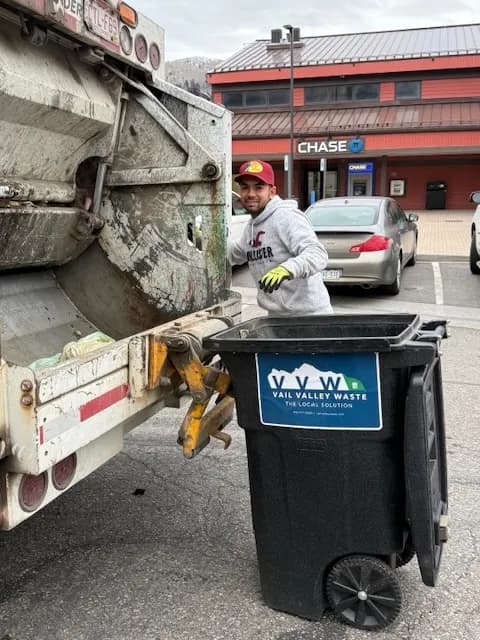
Aspen —The smell of a landfill is distinct — a heavy, sweet rot that clings to the back of your throat, a scent that has haunted the offices of Vail Valley Waste for years. Susanne Johnson remembers looking out the window at the Eagle County landfill in Wolcott and watching it grow, day by day, a mounting pile of our collective excess. It was troubling, she says, but it also became a quiet motivation. If they were the hauler, why not be part of the solution that limits that growth?
Now, starting in the first week of May, that visual burden gets a new companion: compost bins.
Vail Valley Waste, the only locally owned and operated waste and recycling hauler in Eagle County, is finally introducing residential compost services. It’s a move that feels less like a sudden leap and more like a long-overdue step for a company founded in 2018 by Byron Harrington. For years, customers have been asking for this option, and now, the logistics have caught up to the demand.
“It’s not a leap of faith,” Johnson says. “Everyone who is recycling is already comfortable with separating recycling from trash — this is just one step further.”
The logic is grounded in the hard data of what we throw away. According to the Eagle County Climate Action Plan, 59% of all waste in the municipal solid waste stream is organic, plant and animal-based materials that would otherwise sit in a landfill, generating methane rather than nutrient-rich soil. By diverting these scraps, the county is taking a significant bite out of its goal to reduce greenhouse gas emissions by 50% by 2030.
But this isn’t just theory; it’s a practice already being tested in the town of Avon. Vail Valley Waste partnered with Avon for a commercial composting pilot program that began in November, and the results were immediate. In the first quarter of 2026 alone, eight restaurants in Avon diverted 10.8 tons of organic waste from the landfill.
“We were jumping up and down. We were so excited,” Johnson recalls.
That excitement was born from navigating the messy reality of organic waste. It’s “juicy,” as Johnson describes it, requiring special tailgate seals on trucks to prevent leaks and drivers trained to watch for contamination; that one wrong apple core can spoil the batch. To make it work, the company had to negotiate an agreement with Vail Honeywagon, using their facility in Wolcott next to the landfill to process the organic waste into compost.
Now, that system is expanding to residential customers from East Vail to Dotsero. You can feel the shift in the daily rhythm of waste collection. Instead of a single heavy truck rumbling down the street, there will be a new route, a new rhythm of pickup and diversion. Johnson predicts customers will see a significant decrease in the waste they put out each week, a tangible reduction in the volume heading to the dump.
It’s a small change in the bin, but it ripples outward. It’s about the smell that lingers less long, the landfill that grows a little slower, and the soil that might one day feed the gardens of the valley. It’s about taking the messy, sticky reality of our food scraps and turning it into something that gives back, rather than just sitting there, waiting to break down.
Keep up with Aspen
The day's Western Slope news, one email each morning. Free.

S&P 500 Slips Modestly as Weak Retail Sales and Oil Prices Drive Market Correction

Aspen Essay Connects Generations Through Highway 82 Landmarks