Western Slope Ranchers Use Satellite Collars to Track Wolves
Ranchers on the Western Slope are switching from expensive physical towers to satellite-based virtual fencing to monitor cattle and spot wolf attacks in real time.
Colorado —Why are ranchers on the Western Slope putting GPS collars on their cows instead of building more fences?
Because the old way is too expensive, too ugly, and frankly, too slow.
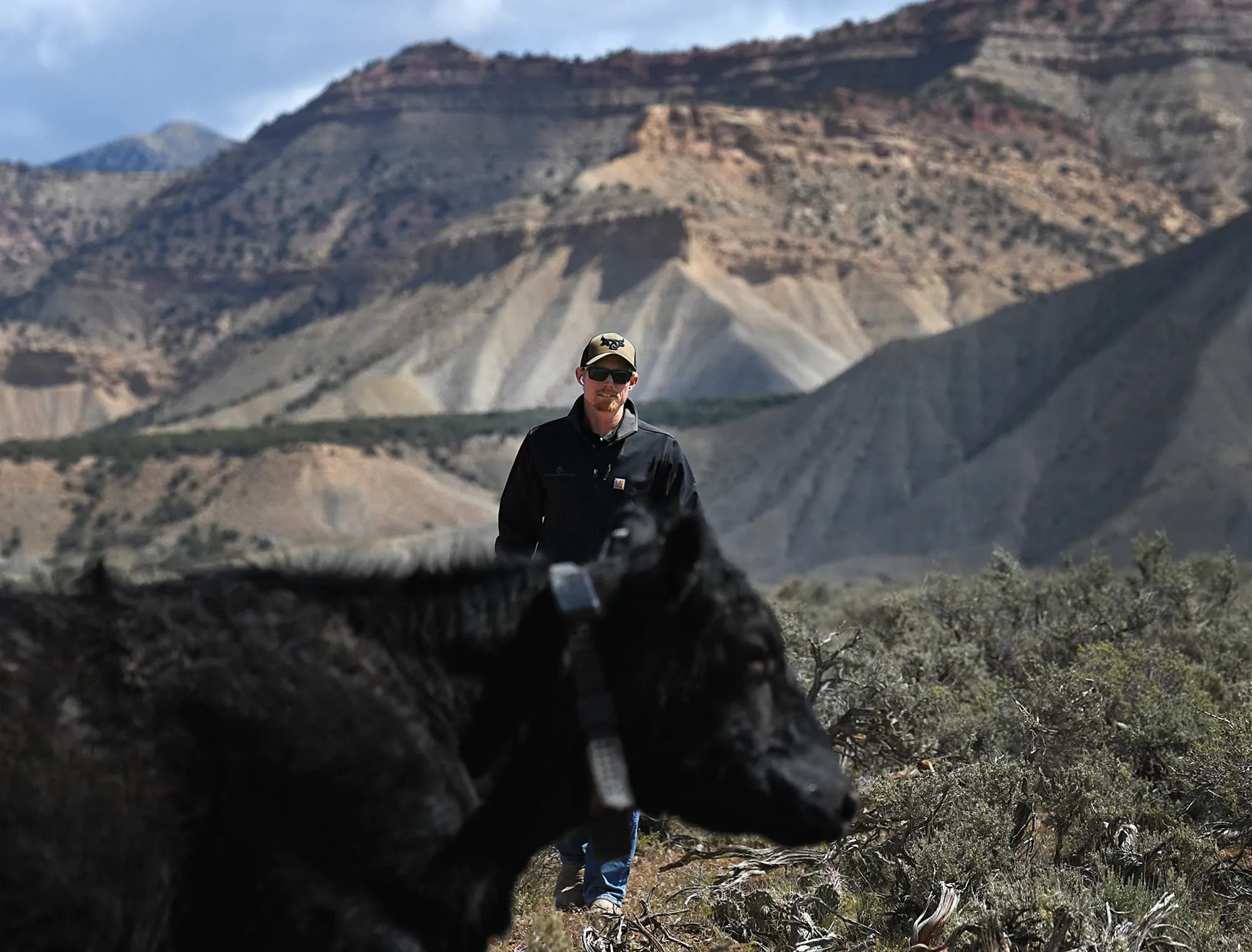
Lloyd Calvert stands in a 15,000-acre pasture near Loma, watching a cow wander toward a water tank. The animal isn’t wearing a bell. It’s wearing a collar with a small solar panel on top. That collar talks to a satellite. That satellite talks to Calvert’s phone.
It’s called virtual fencing. And it’s changing how people manage land from Delta County out to the high desert.
The technology comes from a company called Halter, which started in New Zealand and arrived in the U.S. in 2024. It’s an upgrade from the version introduced in Colorado in 2021. The old system worked, but it relied on control towers. Those towers were ugly. They were expensive to install. And they had a limited range.
This new system doesn’t need towers. It uses satellites. That means you can steer cattle from anywhere. Calvert manages the High Lonesome Ranch for Paul Vahldiek Jr., a Texas attorney and conservationist. The ranch covers 300 square miles. Calvert can check on the herd from his office. He can do it from a Tyler Childers concert in Las Vegas.
The question is whether this tech actually helps the bottom line. The cost savings are clear. By removing the need for physical infrastructure, ranchers save money. They also preserve views. That matters in a place where landscape is currency.
But there’s a bigger reason for the shift. It’s wolves.
Colorado’s wolf reintroduction program is shaky. Just 32 known wolves are roaming the landscape. The federal government has blocked CPW from adding more. The program’s conservation manager stepped down without promising success.
Ranchers are nervous. When wolves kill cattle, the law says wolves can be killed. But you need to know where the wolves are.
CPW says it’s relying on technology to track them. But the data is often old by the time ranchers see it. “We’re reliant on technology to tell us where wolves are at,” one CPW employee told the Parks and Wildlife Commission. “By the time we see the data, it’s old data, so we don’t really know where the wolves are at.”
Halter’s system fixes that lag. It provides a livestream of cattle behavior. Calvert says he can tell when a predator is harassing the herd just by watching the movement on his phone. The collars send real-time data. If the cows bunch up and start moving fast, a wolf might be close.
This isn’t just about keeping cows in. It’s about keeping predators out.
The old towers blighted the landscape. They were a visual reminder that someone was watching. The new system is invisible. You don’t see it until you look at the data.
Calvert hops a fence near a solar-powered water pump on the High Lonesome Ranch, east of Douglas Pass Road in Mesa County. He checks the equipment. It’s simple. It’s reliable. It’s different.
The shift to satellite-based virtual fencing isn’t just a tech upgrade. It’s a survival strategy for ranchers facing a changing landscape and a uncertain wolf population. It gives them eyes on the ground without the cost of towers. It gives them peace of mind.
“It’s fundamentally changing grazing,” Calvert says. “It’s removing the need for towers, preserving priceless views, and giving ranchers a livestream to spot potential wolf attacks before they happen.”
The cows don’t care about the technology. They just care about the grass and the water. But for the people managing the land, the collar is the difference between a bad night and a bad year.
Keep up with Colorado
The day's Western Slope news, one email each morning. Free.


Federal Report Sets 200,000 Acre-Foot Water Conservation Target for Upper Basin
Colorado Parks and Wildlife Deploys Precision Drones for Weed Control