Arkansas River Outfitters Book Solid Despite Low Snowpack
Arkansas River outfitters report strong bookings and full operations despite record-low snowpack, as guides adapt to technical, clear-water conditions in Browns Canyon.
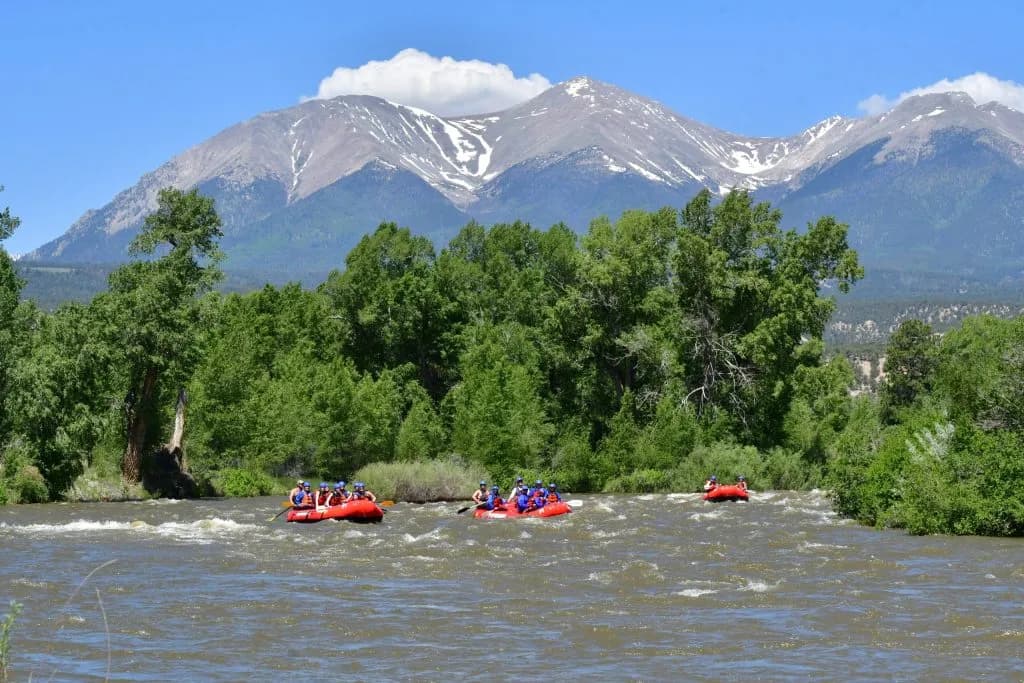
Grand Junction —Arkansas River outfitters are booking solid despite record-low snowpack and predictions of well-below-normal stream flows for much of the summer.
The business isn’t slowing down. The Arkansas River Outfitters Association confirmed in a news release that guiding companies are open, fully staffed, and planning to operate through the entire season. This is one of the state’s premier whitewater destinations, stretching over 100 miles of varied difficulty levels. Browns Canyon remains a primary draw, offering both scenic vistas and technical rapids.
Travis Hochard, the association’s president, says the lower water creates a specific kind of adventure. It’s not a failure of the waterway; it’s a different product.
“Low water creates a different kind of adventure — clear water, more technical rapids and a chance to slow down and take in the canyon,” Hochard said.
Mark Hammer, owner of The Adventure Company with locations in Buena Vista and Breckenridge, reports strong reservations. He’s used to adjusting operations based on conditions. Every year, outfitters operate at low water during early and late seasons. They know how to tweak the experience to ensure quality for guests.
“Whether it’s rafting or fishing, us Arkansas River outfitters, we know how to adjust, and the fortunate thing is we have an incredible resource on the Arkansas River,” Hammer said.
The uncertainty lies in the exact volume of water moving through the system. A strong El Niño pattern is developing over the Pacific Ocean. Hammer hopes the weather system brings rain to alleviate widespread drought conditions and boost river flows. But until that happens, operators are working with what they have.
Low water might mean fewer trips on advanced and expert sections, like the stretch known as The Numbers. It doesn’t mean the waterway is flat or boring. Hammer calls it a “common misunderstanding” that low water equals mellow or easy conditions.
“Every piece of water is different, you can’t generalize for the entire river or even a certain rapid,” Hammer said.
The physics change when the water drops. Obstacles become more prominent. Features like drops grow larger because there is less water to smooth them out. Rafting becomes more technical. Guides have to navigate around rocks that might be submerged at higher flows. The waterway reacts differently depending on its structure — constrictions, bends, and drops all behave uniquely.
For thrill-seekers, the conditions can actually be better. Companies are pointing customers toward these technical sections. The water is clearer. The obstacles are more visible. The ride is more intense.
The short version: locals and tourists aren’t staying home because the waterway is low. They’re booking trips. Outfitters are adjusting their routes. The business continues.
The real question is how long this holds if the El Niño fails to deliver the expected rain. If the drought deepens, the technical adjustments will have to become more drastic. For now, the river is holding up. The customers are showing up. The guides are working.
Keep up with Grand Junction
The day's Western Slope news, one email each morning. Free.



Canadian Tariffs Force Grand Junction Startup To Triple Bike Rack Price

Vail Musician James Carstensen Dies After Choosing Hospice Care