Cargill Locks Out 1,700 Workers at Fort Morgan Plant
Cargill initiated a lockout at its Fort Morgan meat processing plant early Wednesday after workers voted 90% against the company's final contract offer, affecting more than 1,700 employees.
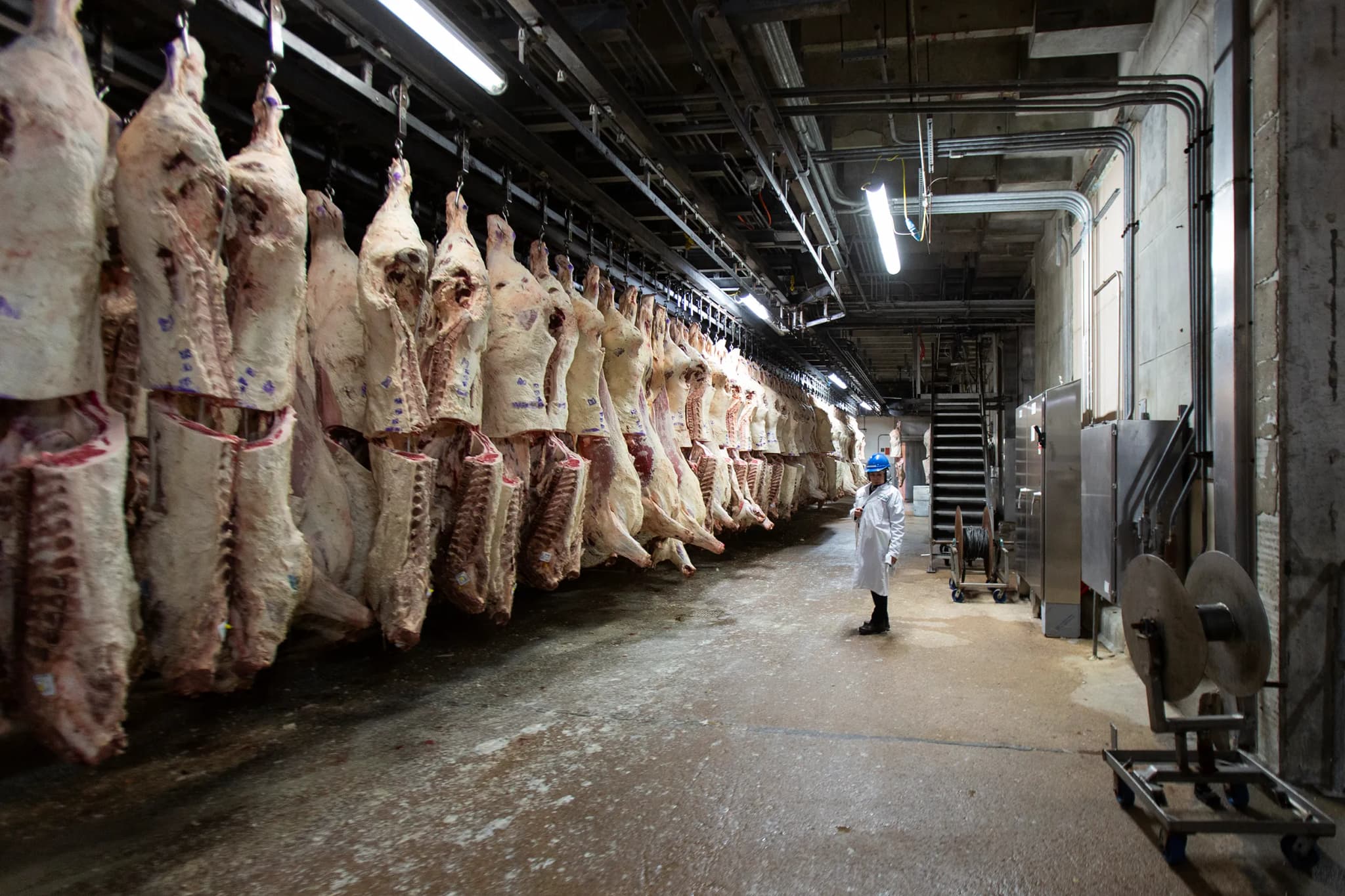
Colorado —Dean Modecker stood in the parking lot of the Cargill Meat Solutions plant in Fort Morgan and watched the barriers go up.
It was 12:01 a.m. on Wednesday. The union had just voted 90% against the company’s "last, best and final offer." In that same hour, the employer notified the Teamsters that the lockout was in effect.
“They put out security and they’re refusing to allow us back at the facility even though our members just want to work,” Modecker, secretary-treasurer of Teamsters Local 455, said. “What that meant is that the minute we left the parking lot (last night), they put up the barriers.”
That’s the local reality of a lockout that affects more than 1,700 workers. These aren’t abstract numbers on a spreadsheet; they are neighbors who live in Fort Morgan, who drive on Main Street, who send their kids to the local schools. And as of Wednesday morning, they were shut out of their jobs.
The question is whether the community can absorb the shock of 1,700 workers suddenly losing their daily wages, or if the ripple effect hits harder.
Negotiations broke down about four weeks ago. For the past month, workers stayed home but kept getting paid. That pay ended last night. Now, the uncertainty returns.
Modecker wasn’t sure how the plant kept processing beef for the last month without its full workforce. “We usually run 2,500 heads a day,” he said. Union workers are employed throughout the entire line, from the kill floor to the cutting room. If the lockout drags on, the question isn’t just about the workers’ paychecks — it’s about the flow of beef to the rest of the country.
Cargill says it made a calculated move.
“Continued uncertainty around a potential work stoppage creates challenges to operating safely, responsibly and reliably,” said Hli Yang, a company spokesperson.
Cargill argues its proposal was fair. They point to a five-year agreement that represents an estimated $33.4 million investment. They note that base wages are now $23.50, up 53% since 2018, with an average wage of $24.78.
“We believe our proposal is fair and competitive,” Yang said. “While negotiations continue, we remain focused on safety, responsible operations and serving customers through Cargill’s broader supply chain network. Under current plans, we do not expect material impacts to producers or customers.”
To prove it, Cargill redirected cattle to other facilities to honor commitments to producers. They’re keeping the supply chain moving, even if the Fort Morgan line is paused for its own workers.
But for the 1,700 workers locked out, the "reliable" operation feels a lot like a lockout.
Modecker noted that the workers just want to work. They rejected the contract, but they didn’t reject the job. Now, they’re waiting. The barriers are up. The security is out. And the clock is ticking on how long Fort Morgan can sustain 1,700 households without a steady paycheck.
The plant is running, the cattle are moving, and the workers are standing in the lot.
Keep up with Colorado
The day's Western Slope news, one email each morning. Free.
Federal Report Sets 200,000 Acre-Foot Water Conservation Target for Upper Basin
Colorado Parks and Wildlife Deploys Precision Drones for Weed Control