CoPIRG Holds Graveside Service for Expired Software E-Waste
CoPIRG hosts a Denver graveside service highlighting 1.7 billion pounds of e-waste caused by expired software, urging lawmakers to pass right-to-update statutes.
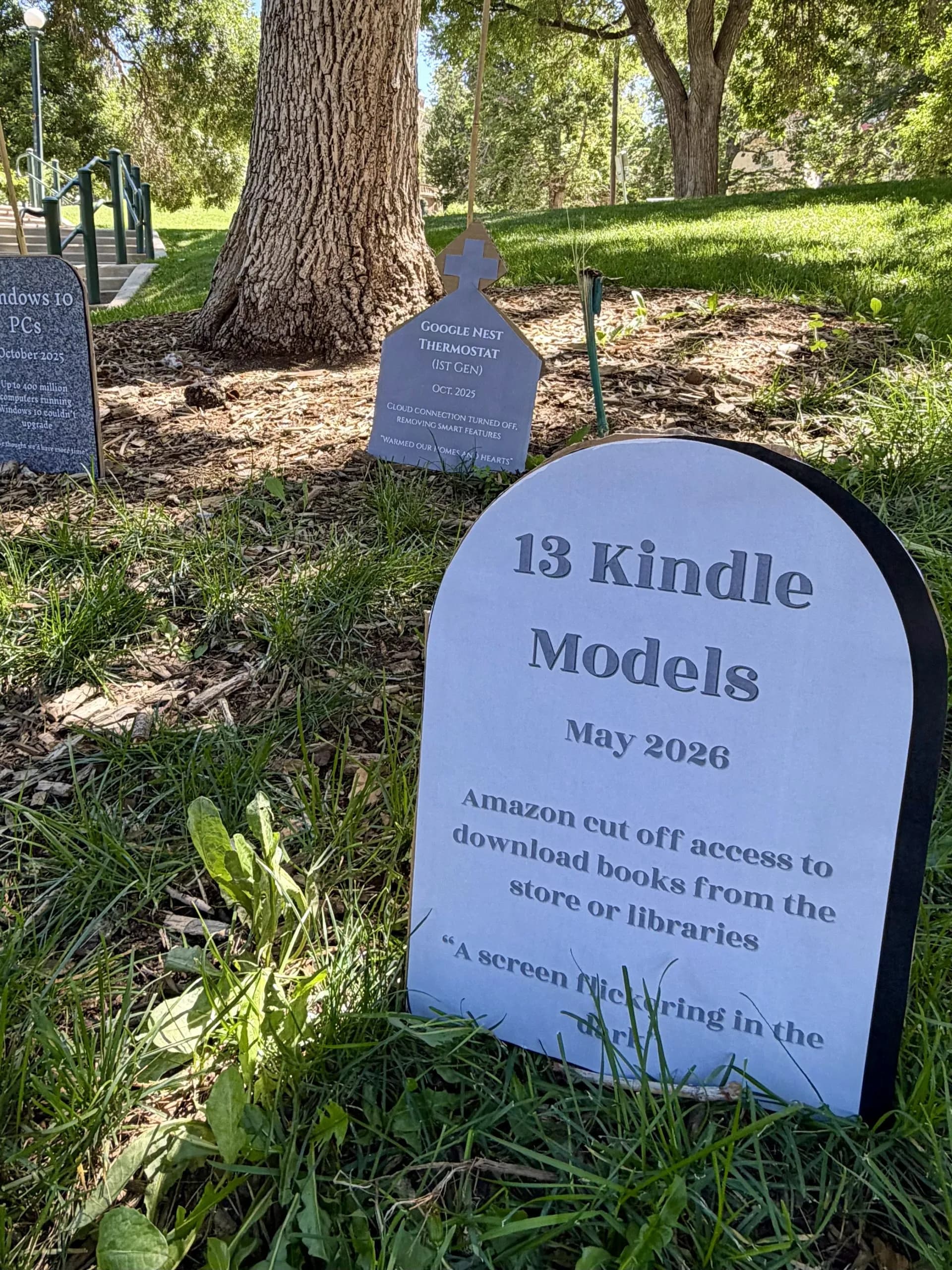
Colorado —The gravel crunches underfoot near the bandshell at Denver’s Governors Park, where a small crowd gathers not to mourn a person, but a piece of plastic. It is July 14, 2026. The sun beats down on handmade wooden markers staked into the earth. Each marker bears a name: Kindle, Windows 10 PC, Spotify Car Thing. They look less like headstones for the dead and more like placeholders for things that were simply forgotten.
Nolan McGuirk stands there, holding a simple e-reader. He grew up with dyslexia, and this specific device was his lifeline — a bridge between the intimidation of a blank page and the comfort of printed words. Then Amazon stopped supporting it. Now, it sits in a drawer, black screen reflecting the sky.
“It’s just kind of sitting in a drawer now, which is unfortunate,” McGuirk said. He was part of a satire-with-a-point “graveside service” for outdated electronics, organized by the consumer watchdog CoPIRG. The event highlighted a growing pile of e-waste created not by broken hardware, but by expired software.
The numbers are staggering. According to a new report from the CoPIRG Foundation, 1.7 billion pounds of electronic waste has been created nationwide since 2014 by expired software and canceled cloud services. The largest contributor? The expiration of Windows 10, which resulted in up to 1.6 billion pounds of waste from PCs that can no longer upgrade to Windows 11.
McGuink’s personal electronics graveyard includes his old Kindle and a perfectly capable computer running Windows 10. Microsoft stopped supporting the latter when it launched Windows 11, rendering his machine obsolete in the eyes of the software update cycle.
“I 100% think making the life of these devices longer is really important, and not shutting off the services,” McGuink said. “If you’re just doing it to sell more products or sell the newer product, I feel like that’s a waste of the money consumers spend.”
The funeral service was more than performative. It was a call to action for manufacturers and lawmakers alike. CoPIRG wants companies to negotiate with consumer groups to keep updating software and maintaining internet connections for older models. If that fails, they are turning to the state legislature.
Colorado has already passed “right to repair” laws, but CoPIRG and its allies are pushing for “right to update” statutes. The goal is simple: prevent companies from throwing functional devices into landfills simply because a server goes offline or an OS update is withheld.
This matters for folks on the Western Slope, too. When a Chromebook distributed to a student in Glenwood Springs or Grand Junction stops receiving software updates, it doesn’t just become a paperweight. It becomes waste. And that waste adds up to millions of pounds in landfills, straining local disposal systems and increasing the cost of managing municipal waste streams.
CoPIRG notes that tens of thousands of stripped-down Chromebooks became obsolete when Google’s software expired. The message is clear: hardware outlives its software support, and consumers are left holding the bag.
As the service concluded, the gravestones remained standing in the Denver heat. They were not declarations of death, but markers of neglect. A Kindle that can still read. A PC that can still process. Waiting for a law to catch up with the technology.
Keep up with Colorado
The day's Western Slope news, one email each morning. Free.


Federal Report Sets 200,000 Acre-Foot Water Conservation Target for Upper Basin

Colorado Parks and Wildlife Deploys Precision Drones for Weed Control