Dallas Symphony Orchestra Brings Concert Opera to Vail's The Amp
The Dallas Symphony Orchestra marks its 25th Vail residency with a rare concert opera production of Puccini's Madama Butterfly at The Amp, led by Music Director Fabio Luisi.
Aspen —Jennifer Rowley is stepping into the role of Cio-Cio-San, a young Japanese bride whose devotion to an American naval officer drives one of opera’s most heartbreaking tragedies. She’s not just singing; she’s delivering a vocal performance that demands "rich, full-bodied sound" and "emotional depth" at high altitude.
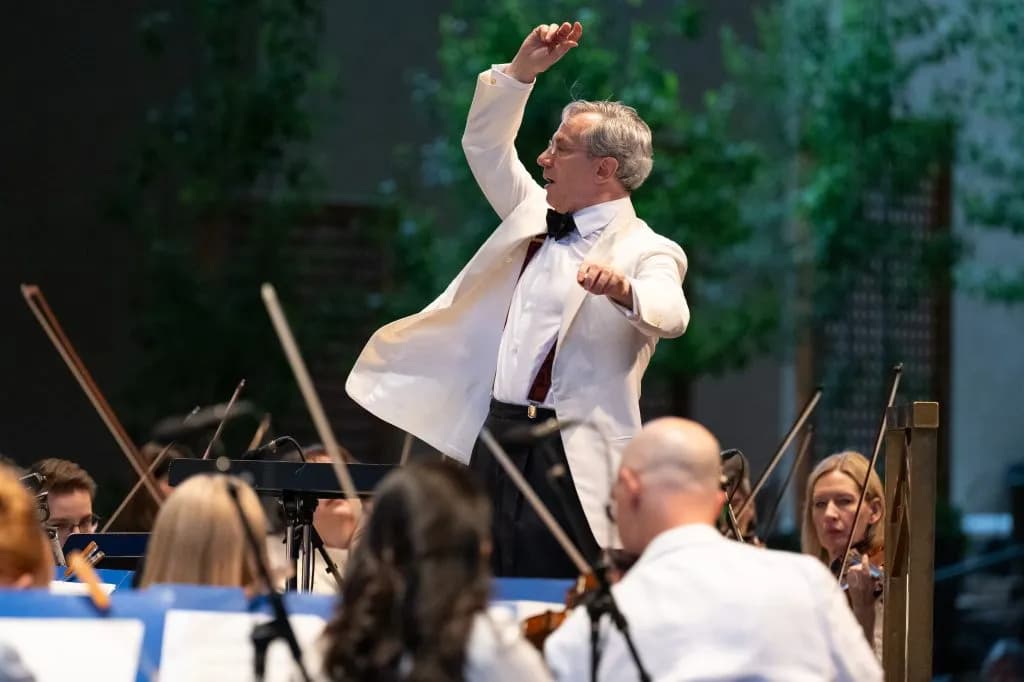
This is the Dallas Symphony Orchestra’s (DSO) 25th anniversary residency in Vail, and they’re marking the milestone by doing something they’ve never done before: a concert opera. On July 8, Music Director Fabio Luisi leads the ensemble in a performance of Puccini’s Madama Butterfly at The Amp.
It’s a bold artistic choice. Concert opera strips away the sets, costumes, and stagecraft of a traditional production. It’s just the orchestra and the singers. But it’s not cheaper to produce in terms of artistic risk. As the source notes, opera is "logistically, financially and artistically demanding" to pull off outside a dedicated opera house. The DSO and Bravo! Vail are betting that their artistic ambition outweighs the logistical headache.
Let’s look at the cast. Rowley is joined by tenor Evan LeRoy Johnson as B.F. Pinkerton, the "self-satisfied officer" whose careless disregard for his wife sets the tragedy in motion. The supporting cast includes mezzo-soprano Manuela Custer, baritone Alessandro Luongo, and tenor Keith Jameson. All are making their festival debuts. The Bravo! Vail Festival Chorus, directed by Taylor Martin, provides the famous humming chorus that ends Act II, underscoring Butterfly’s lonely vigil.
For locals, this isn’t just about high culture. It’s about what happens when a major ensemble like the DSO, which has been a cornerstone of Vail’s Independence Day celebrations for a quarter-century, decides to pivot its programming. The Amp is a specific venue, a specific community space. Filling it with a concert opera changes the dynamic from a standard pops concert to a more intense, dramatic experience.
Luisi is well-positioned for this. He’s celebrated in both the opera and orchestral worlds, and his long relationship with the DSO has produced "consistent distinction." Puccini’s score builds with "aching tenderness" toward that tragedy, requiring precision and power. Doing this at altitude adds a layer of physical difficulty for the vocalists, who have to push that "full-bodied sound" against the thinner air.
The financial implication? The source mentions the production is "financially demanding." While we don’t have a line-item budget for this specific concert opera, the commitment of both the DSO and Bravo! Vail signals a significant investment. They aren’t just bringing in a band; they’re bringing in a cast of professional opera singers, a chorus, and a music director who is a dual-threat in the industry. This is a premium product.
It’s also a logistical one. Without the crutch of sets and costumes, the focus is entirely on the music and the voices. If the singers falter, there’s no set change to hide behind. It’s a test of the orchestra’s core competency.
The performance runs from July 2–8, with the main event on July 8. It’s a fitting occasion for a 25th-year celebration. The DSO has been a staple here for decades. This move to concert opera suggests they’re looking to elevate their profile, to show they can handle the most complex works in the repertoire, not just the crowd-pleasing pops.
For the folks in Vail, it means a different kind of evening at The Amp. It signals a shift toward higher-stakes artistic experiences rather than passive entertainment. It also points to a significant chunk of the Bravo! Vail budget being directed toward this specific ambition.
The bottom line? The Dallas Symphony Orchestra is betting its reputation and its residents' wallets on a high-wire artistic act. They’re stripping away the theatrical fluff to prove they can deliver the raw emotion of Puccini with just their musicians and singers. It’s ambitious. It’s expensive. And it’s happening right here in Vail.
Keep up with Aspen
The day's Western Slope news, one email each morning. Free.