Founders Raised Madeira as America Celebrates Semiquincentennial
Explore how Benjamin Franklin, George Washington, and Thomas Jefferson embraced wine as a symbol of nation-building, from Washington’s Madeira supplies to Jefferson’s White House cellar.
Aspen —“Behold the rain which descends from heaven upon our vineyards; there it enters the roots of the vines, to be changed.”
That fragment, pulled from a 1779 letter by Benjamin Franklin to a friend, captures the almost spiritual reverence early American leaders held for the vine. It’s a far cry from the modern obsession with terroir and micro-climates, yet it speaks to the same fundamental truth: wine is inextricably linked to the land, and by extension, to the people who cultivate it. This year marks the “Big One,” the Semiquincentennial, celebrating 250 years since the Declaration of Independence was signed. If you are raising a glass this Fourth of July, consider the history in your bottle. Consider that the wine you pour might just be as American as apple pie, even if the grapes didn’t start out that way.
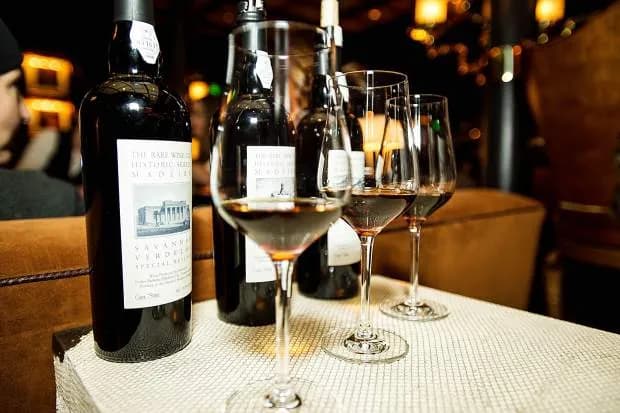
When the 56 delegates toasted their new nation in the summer of 1776, they weren’t pouring local vintages. There was little domestic wine to speak of, so they raised Madeira, the fortified Portuguese wine, in honor of their shared good fortune. It was a practical choice, born of necessity and taste. George Washington, the first president and a signer of the Declaration, understood the value of a good supply line. His expense accounts, preserved at the Library of Congress, reveal significant orders for Madeira throughout his tenure as general. The summer of 1775 required extra “fortifications” for the war effort, and records show Washington ordered close to 2,000 bottles of Madeira.
There is a specific bill from 1776, still held by the still-serving Fraunces Tavern on the corner of Pearl and Broad streets in lower Manhattan, that indicates Gen. Washington once ordered 78 bottles of Madeira for a banquet with his troops. You can almost hear the clinking of glasses in that lower Manhattan tavern, the weight of the moment pressing down on the room. It wasn’t just about getting drunk; it was about celebration, about marking a moment in time with something tangible.
Then there is Thomas Jefferson, who had a healthy respect for wine, or as some at the time called it, a weakness. Jefferson discovered the joys of French wines during his time in Paris as Foreign Minister. He imported bottles of fine Bordeaux, arranging to purchase them directly from the houses of Château Lafite, Haut-Brion, and the sweet Château d’Yquem. A bottle of 1787 Château Lafite, famously featuring the initials “Th. J.,” later became the object of scandal detailed in the book The Billionaires Vinegar, which outlines the deceptive sale of fake bottles purported to be Jefferson’s wines. It’s a reminder that even in the 18th century, authenticity was a luxury, and provenance was hard-won.
During his presidency, from 1801 to 1809, Jefferson maintained a cellar under the west wing of the White House, dubbed “the Icehouse,” which held a stash of his personal wine collection. It is reported that in those two terms, he purchased 20,000 bottles of wine. That’s a lot of wine for a man who also had to worry about building a new nation. Franklin, who many considered to be a wine mentor for the younger Jefferson, also spent time in Paris on official business, maintaining a cellar full of fine Burgundy and Bordeaux.
If you look closely at the history, you see a pattern. The founders didn’t just drink wine; they curated it, they traded it, they argued over it. They understood that wine was a bridge between cultures, a way to connect with the world even as they declared independence from it. So, as you prepare for the fireworks and the barbecue, think about the rain that descends from heaven upon the vineyards. Think about the 78 bottles of Madeira that fueled a general’s banquet. Think about the 20,000 bottles that filled Jefferson’s Icehouse.
The wine you pour this Fourth of July is not just a beverage. It stands as proof of the resilience of the human spirit, to the ingenuity of those who first crossed the Atlantic with vines in their pockets, and to the enduring belief that a glass of wine can make a moment feel like history. It’s a sensory experience that connects us to the past, to the land, and to each other. And that, perhaps, is the most American thing of all.
Keep up with Aspen
The day's Western Slope news, one email each morning. Free.