Aspen's July 4 Shifts From Party to Patriotism During WWI
Aspen’s Fourth of July transformed from a raucous party in 1917 to a solemn patriotic tribute in 1918, reflecting the town's shift from economic prosperity to wartime unity.
Aspen —Why did Aspen’s July 4 celebrations change so drastically between 1917 and 1918?
The answer isn’t about boredom. It’s about war.
According to Aspen Times reporter Willoughby, the contrast between those two Fourth of July celebrations offers a stark look at how global conflict reshapes local life. The difference wasn’t subtle. It was structural, emotional, and deeply patriotic.
In 1917, America had been at war for over two years, but the local impact in Aspen was mostly economic. The mines were thriving because lead and zinc prices had risen. The Smuggler Mine, specifically, found a high-quality ore body deep underground and was preparing to start the 19th level. The war hadn’t yet drained the town’s spirit or its people.
So, the 1917 celebration was exactly what you’d expect: loud, expensive, and focused on entertainment.
Planners leaned hard into Aspen’s nickname, the "Crystal City of the Rockies." They advertised the event as the best from Grand Junction to Leadville. To get people here, they set up a special train. The day started with dynamite blasts — the traditional "salute of the guns" — followed by a parade featuring business floats.
The afternoon moved to the fairgrounds in the west end for baseball. Aspen beat Carbondale 11 to 9. But the real draw, according to Willoughby, was the money on the line for the five-mile auto and motorcycle races. The evening capped off with fireworks and a ball featuring the McHugh Orchestra.
It was a party.
Fast forward to 1918. America had been in the war for longer. Many locals were serving overseas, and the town was focused daily on the details of the conflict. The planners knew they couldn’t just throw a party anymore. They needed to signal something different.
They changed the opening. Instead of dynamite blasts, all churches rang their bells, labeled "liberty bells" - at the same time.
There was a practical benefit to this shift, too. The night before, heavy rain had fallen, which locals welcomed because it "made the city absolutely dustless." But the focus of the day had shifted from noise to symbolism.
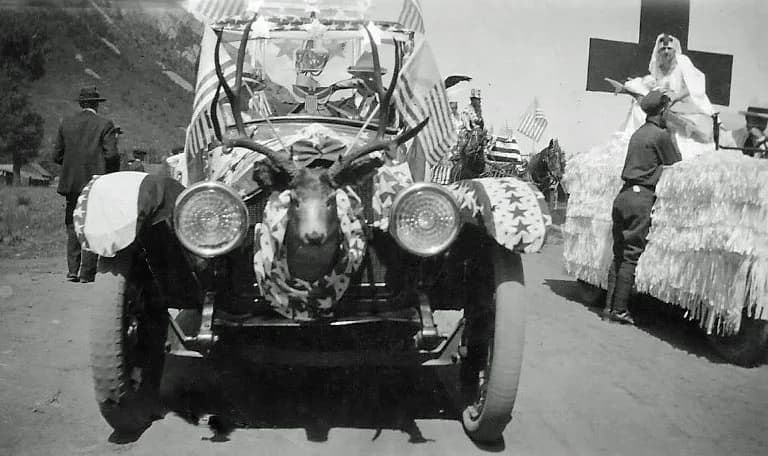
The parade still happened, but the floats told a different story. Volunteers created "Allied Autos," featuring young girls dressed in costumes representing the 19 countries allied in the war. The entertainment wasn’t about music and dancing; it was about allegiance.
The downtown band concert was replaced by the "Big Show" on Main Street near the Jerome. This event included patriotic songs, a crowd pledge of allegiance, a reading of the Declaration of Independence, and a reading of President Woodrow Wilson’s message.
They kept the baseball game. Aspen played Carbondale again and won 11 to 9. But even that felt different, framed within the context of a nation at war.
The question is whether locals in 1918 felt the weight of that change, or if they just appreciated the rain. To hear Willoughby tell it, the shift was deliberate. The town moved from celebrating its wealth and speed to celebrating its unity and purpose.
The 1917 celebration asked, "How much fun can we have?" The 1918 celebration asked, "Who are we fighting for?"
The math holds up: when the men leave and the news gets bad, parties change. The bells replaced the blasts. The flags replaced the floats. The message replaced the music.
As Willoughby notes, you can’t get much more patriotic than keeping a baseball game while the world burns, but it’s the structure of the day that tells the real story. The town didn’t stop celebrating. It just started meaning it.
Keep up with Aspen
The day's Western Slope news, one email each morning. Free.