Egypt Unveils Fourth-Century City in Dakhla Oasis
Egypt reveals a well-preserved fourth-century Byzantine residential city in the Dakhla Oasis, featuring streets, a basilica, and artifacts to boost tourism.
Aspen —What does a city buried for sixteen centuries look like when it finally exhales?
In the western desert of Egypt, the Dakhla Oasis has just done exactly that, revealing a residential city so well-preserved it feels less like an excavation and more like a pause button pressed on the fourth century. The announcement, made on Saturday by the Egyptian government, details a settlement where north-south thoroughfares intersect with east-west streets, forming open squares and public spaces that once bustled with the lives of Byzantine citizens. This is not a vague historical concept; it is a tangible urban grid, complete with a basilica church dating back to the mid-fourth century standing at the settlement’s head, overlooking the main streets as if waiting for the faithful to return.
The discovery is part of a broader push to bolster Egypt’s tourism sector, a vital source of foreign currency for the cash-strapped nation. Alongside the strategic Suez Canal, antiquities sightseeing drives the economy, and these new finds in Dakhla and at the Marina el-Alamein site near Alexandria are intended to draw eyes — and wallets — to the desert. But beyond the economic calculus, there is a warmth to the archaeological narrative that speaks to daily life rather than just imperial grandeur. Hisham el-Leithy, secretary general of the supreme council of antiquities, described the urban development with precision, noting the clear layout of the streets and the public spaces that defined community interaction.
If you look closely at the unearthed quarters, you can feel the texture of that ancient existence. Mahmoud Massoud, who chairs the archaeological mission, pointed out remains of two watchtowers safeguarding the outskirts, alongside heavily fortified structures with thick defensive walls. The houses were not mere shelters; they were built with reception halls and vaulted roofs, designed for comfort and status. Among them was the house of Tisous, identified as a church deacon, which served as a house church before the basilica was constructed. It is a detail that grounds the spiritual in the domestic, showing how faith and family intertwined in the fourth century.
The material culture tells the rest of the story. Archaeologists uncovered bread ovens, kitchens, and stone grinding tools, evidence of the food production that sustained the community. Bronze coins bearing portraits of Byzantine emperors, Latin inscriptions, and Christian symbols were found alongside gold coins dating to the reign of Roman emperor Constantius II, who ruled between 337 and 361. Diaa Zahran, head of the Islamic, Coptic and Jewish Antiquities department, revealed a collection of about 200 pottery fragments, known as octraca, used as writing material. These fragments bear inscriptions detailing commercial transactions and correspondence, offering a voice to the merchants and neighbors who once walked these streets.
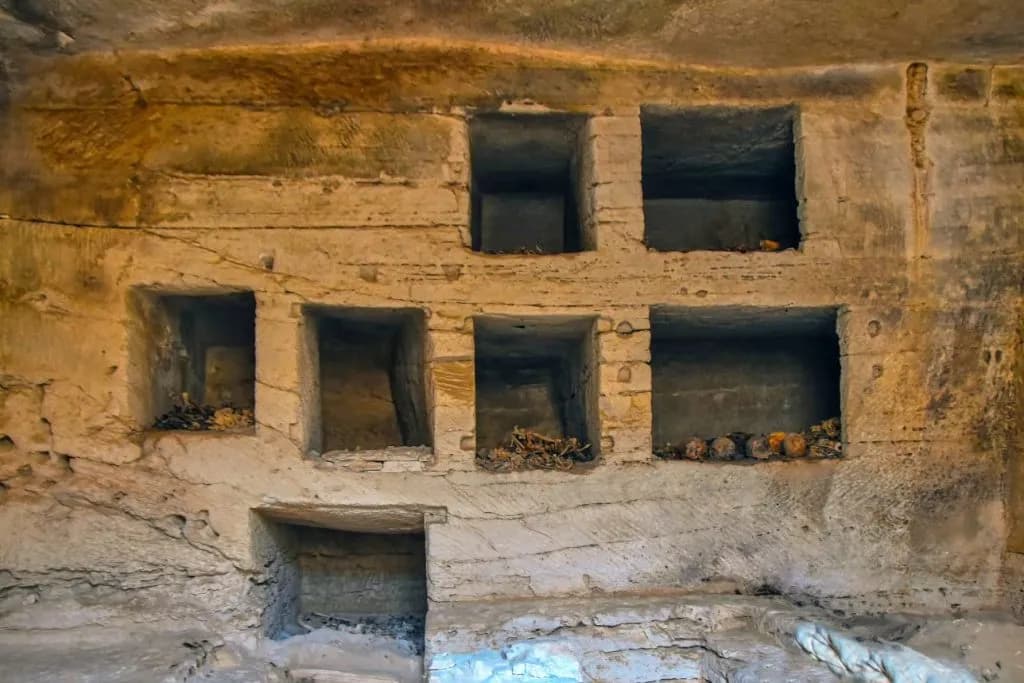
The Dakhha Oasis, located in Egypt’s western province of New Valley, is already on UNESCO’s Tentative List, a step away from World Heritage status. This discovery adds weight to that candidacy, providing a window into urban development and economic activities that were previously only inferred. Meanwhile, a separate find at the Marina el-Alamein site, around 62 miles west of Alexandria, has yielded 18 ancient tombs, bringing the total found at that site to 48. There, the focus shifts from the living city to the resting places of the dead, with rock-cut tombs averaging 8 meters in depth and surface limestone-built tombs containing pottery vessels, amphorae, lamps, and plates.
The contrast between the bustling, coin-clinking streets of Dakhla and the silent, limestone chambers of Alamein is stark. One stands as proof of the vibrant, noisy reality of Byzantine life; the other is a quiet archive of burial rites. Yet both are anchored in the same historical moment, a time when the desert was not a barrier but a bridge, connecting the Mediterranean to the interior, and the Roman Empire to the local communities that thrived within its shadow. The dust of the western desert settles differently now, heavy with the weight of revealed history, waiting for the next layer to be peeled back.
Keep up with Aspen
The day's Western Slope news, one email each morning. Free.