Rifle Helitack Crew Lost in Knowles Fire Due to Radio Failures
Four Rifle Helitack firefighters died in the Knowles fire after radio failures and poor situational awareness left them unaware of the approaching Snyder blaze.
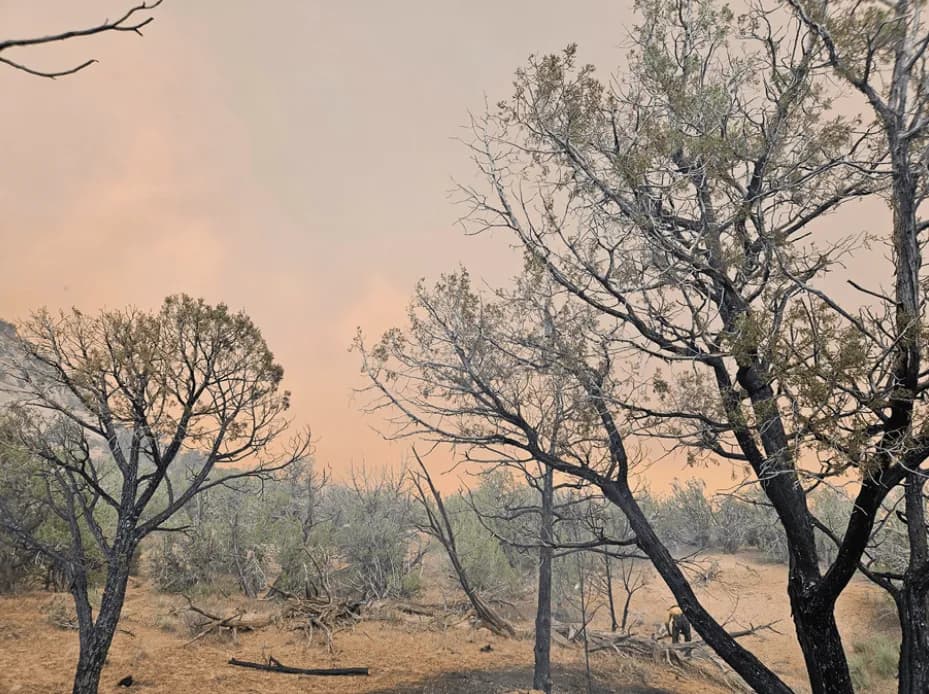
Rifle —Emily Barker sent a photo to her superintendent on June 27. The sky was mandarin-colored, a strange sunset at 2:30 in the afternoon. It was beautiful. It was also the last calm moment before the Knowles fire swallowed her crew.
The question locals ask is simple: how did four experienced firefighters get caught?
The Colorado Sun reports that the answer lies in a failure of information. On that day, fierce winds whipped up fires all over remote areas west of Grand Junction. At least ten blazes had been sparked by lightning in the previous days. Pilots struggled to maneuver through blinding smoke. On the ground, fire managers fought with inadequate radios and changing jurisdictions.
"They couldn't track exactly where crews were," the report notes.
This is the crux of the tragedy. Barker’s crew, the Rifle Helitack team, was working to contain the Knowles fire, which had grown to over 28,000 acres after merging with two other blazes. Meanwhile, a new fire, later named the Snyder blaze, was igniting along the Dolores River. Reports placed it seven or eight miles away.
That distance is safe. On a normal day.
But the Snyder fire wasn’t sitting still. It was barreling toward the Knowles crew from behind a large rock outcrop that blocked their view. The federal investigation report calls this "incomplete situational awareness."
To hear them tell it, the conditions were extreme. Drought and wind stoked lightning-sparked fires across western Colorado and eastern Utah. Fire managers were playing a deadly game of whack-a-mole. Some pilots said they flew through some of the worst conditions they had ever encountered.
The math holds up when you look at the logistics. Aircraft were grounded by turbulence. Another Helitack crew from the Snyder fire had been picked up an hour earlier. The pieces were there, but they weren’t connected.
That depends on who you ask, but for the families of the fallen, the answer is clear: the systems failed. The radios didn't work. The maps were wrong. The eyes in the sky were blind.
Barker’s text message stands as a testament to the fragility of that day. "It looks like sunset," she wrote. She was right. It looked like the end of the day. For her crew, it was.
As the investigation continues, the focus turns to the future. Will better technology solve the problem? Will more funding fix the staffing issues? The report suggests that the pressure on resources was a key factor.
One crew member, speaking to the Colorado Sun, described the feeling of that afternoon. "We knew it was bad," he said. "But we didn't know how bad."
The Knowles fire burned for weeks. It scarred the landscape. It consumed homes. But its deepest wound was the loss of four lives.
In the end, the story is about the gap between what we know and what we think we know. In the wild, that gap can be fatal.
As one official put it, "We have to learn from this."
The learning is just beginning.
Keep up with Rifle
The day's Western Slope news, one email each morning. Free.