Rural Colorado Schools Face Funding Shortfall Despite Increase
Colorado's plan to increase K-12 funding may not be enough to support rural schools facing declining enrollment and rising costs.
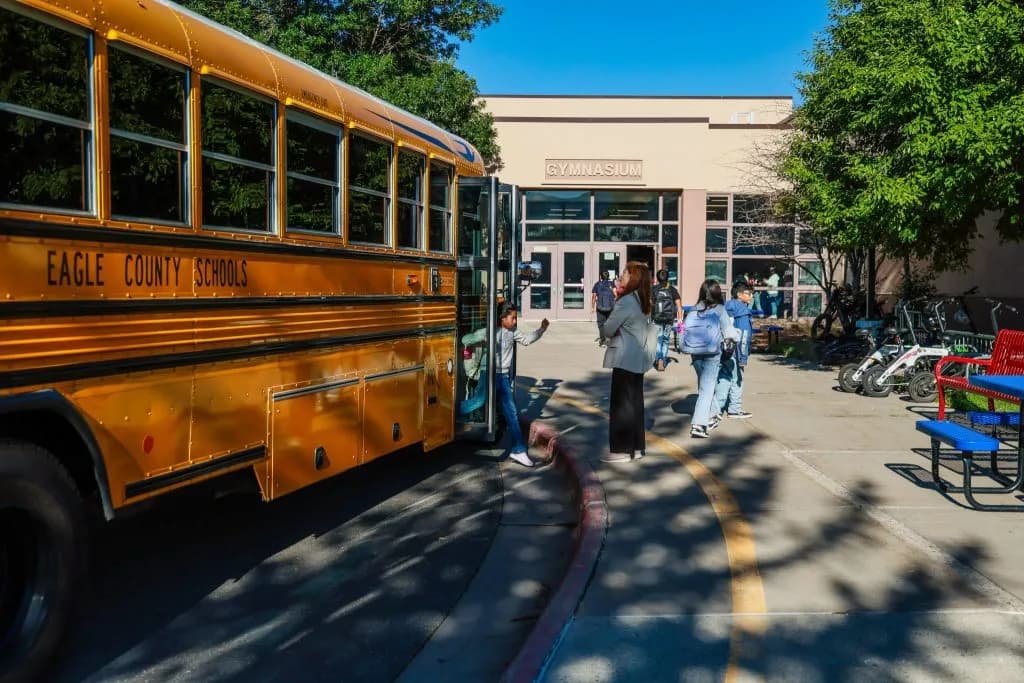
Steamboat Springs —"We know that whatever increases we're talking about are going to be very minimal because of declining enrollment," says Michael Agostinho, president of the Eagle County Education Association and an educator at Eagle Valley High School. This statement gets to the heart of the issue — Colorado lawmakers' plan to increase K-12 funding by nearly $194.8 million next year may not be enough to offset rising costs for rural districts.
The proposed increase would bring per-pupil funding to $12,314 per student, a $440 increase from the current year. However, with falling enrollment, some districts are poised to see cuts. The School Finance Act's fiscal note estimates a decrease of $60,000 in total program funding for the Eagle County School District compared to last year. This decrease is largely due to a drop in student enrollment — the district's 2025-26 pupil count fell by roughly 239 students year-over-year, with steeper drops anticipated for 2026-27.
Rural districts like Eagle County are particularly vulnerable to these changes. "It's not as great as it seems on paper," Agostinho says. The combination of shrinking budgets, rising costs, and falling enrollment has led to cuts across the board, including to educator and administration positions. This will likely have a direct impact on the quality of education provided to students in these areas.
The state's constitutional requirement to increase base per-pupil K-12 funding annually by at least the rate of inflation is being met, but it may not provide sufficient support for rural schools. Studies have shown that public schools are underfunded by over $3.5 billion. The budget stabilization factor, used until 2024 to reduce statutorily required school funding allocations, has also taken a toll on schools. Many are still trying to recover from years of underfunding.
The proposed three-year averaging model for student counts, instead of the current four-year averaging, will weigh recent dips in student enrollment more heavily on funding allocations. This change could have significant implications for rural districts, which are already struggling with declining enrollment. Make no mistake, the fate of these schools hangs in the balance.
In the town of Craig, locals are watching the situation closely. The Moffat County School District, which serves Craig, is also facing declining enrollment and rising costs. The district's budget is heavily reliant on state funding, and any changes to the funding formula could have a significant impact on the community. Folks around here are concerned about the potential consequences of underfunding, it's a worry that's been building for years.
The short version is this: increasing funding by $194.8 million may not be enough to offset the rising costs and declining enrollment faced by rural districts. Read that again; it's a crucial point. The state's plan does not address the underlying issues facing these schools adequately. Worth watching is how the new funding model will affect districts like Eagle County and Moffat County, and whether it will provide the necessary support to ensure that students receive a quality education.
As the situation unfolds, the community will be paying close attention to the impact of these changes on local schools. The 2026 School Finance Act's proposals will have far-reaching consequences, and understanding the potential effects on rural districts is crucial. This will cost taxpayers, but the exact figure is still unclear. What is clear, however, is that the fate of rural schools is precarious, and the community will be watching closely to see how the situation develops. The state's plan to increase funding falls short of what rural schools need, and the funding gap will continue to affect these districts. For now, the community waits with bated breath, wondering what the future holds for their local schools. The future of these schools is uncertain, and the state's plan does not provide a clear solution.
Keep up with Steamboat Springs
The day's Western Slope news, one email each morning. Free.

Will my tax refund be gone if I vote yes
"Coloradans could start seeing ballots for this November’s midterm election hit their mailboxes as early as this weekend