Voces Unidas de las Montañas Tracks 198 ICE Detentions in Western Colorado
A three-person team in Glenwood Springs uses a hotline and Facebook to document 198 confirmed ICE arrests across western Colorado since January 2025, providing real-time data to the Latino community.
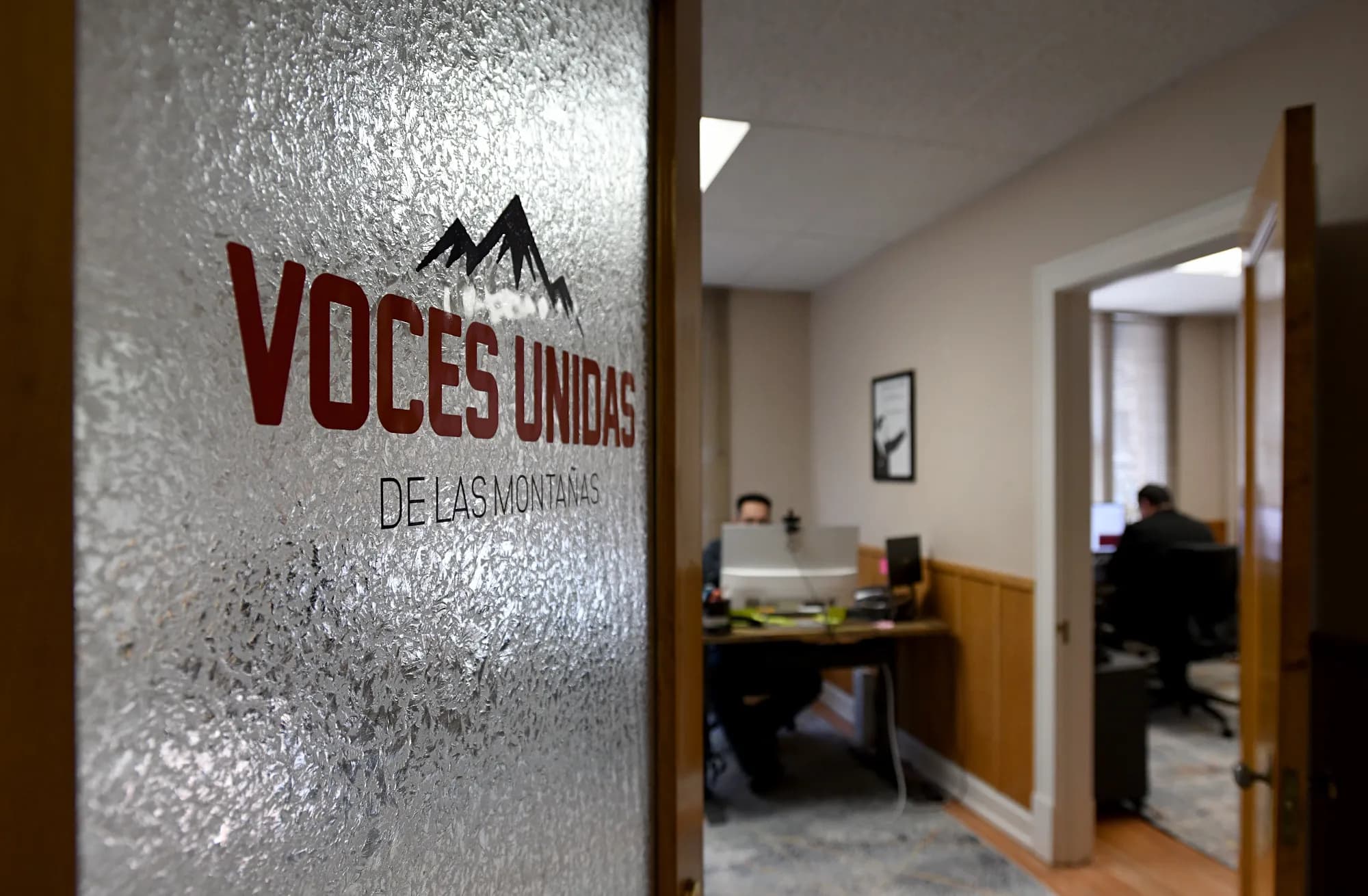
Colorado —The sun hits the brick facade of the downtown Glenwood Springs office just right in the morning, catching the dust motes dancing in the air above Alan M.’s desk. He sits there, under a sketch of Martin Luther King Jr. that reads, “Hate cannot drive out hate,” listening. The line is open. The community is watching. And when the call comes in, it’s not a rumor. It’s a fact. Confirmed.
That’s the word they use. Not “reported,” not “alleged,” but confirmed. It’s the first word in the Facebook post that ripples through the Latino community across the mountain towns, a digital alarm bell ringing out along Interstate 70. A person was taken from the Mesa County Courthouse in Grand Junction at 10 a.m. on May 1. Three days earlier, someone with legal status was pulled from a parking lot in Grand Junction. Before that, a man was taken from the Garfield County Jail in Glenwood Springs.
This is the work of Voces Unidas de las Montañas, a three-person team that has turned into the unofficial, real-time ledger of immigration enforcement in western Colorado. Since January 2025, they’ve documented 198 people taken by U.S. Immigration and Customs Enforcement. That’s not a statistic pulled from a federal press release that arrives weeks later, sanitized and vague. That’s 198 specific instances, tracked from Frisco to Grand Junction, verified by eyes on the ground.
You can feel the weight of that tracking. It’s in the way they’ve built their archive. They aren’t just noting that ICE is active; they’re noting the make, the model, the color, and the license plate of the SUVs. They’re looking for photo and video evidence. They’re waiting until they are certain. Why? Because in a landscape where a single misidentified car can send a family into panic, certainty is the only currency that matters.
Alan takes the calls from his desk, his voice steady. The staff who answer use last initials only. No photos of their faces on the website. No publishing of known ICE license plates or agent faces. It’s a protective armor, woven into the digital fabric of their reporting. They know who is watching. They know the federal officials are looking for gaps in the armor, for someone to point a finger at. So they keep it tight. They keep it real.
The alerts have picked up in intensity as the Trump administration’s immigration crackdown has ramped up. But this isn’t just about volume. It’s about the texture of the fear. It’s about the man who stepped out of his home in Craig to go to work and didn’t come back. It’s about the person pulled over on U.S. 50 in Montrose for what Voces Unidas calls a “fake traffic stop.” It’s about the man at the Eagle airport, ready to board a flight to Nicaragua, who instead found himself in the ICE detention center in Aurora.
And then there are the ace of spades cards.
On one particularly active day in January, relatives found their loved ones’ vehicles abandoned by the roadside. Inside, left like a calling card, was an ace of spades printed with the address of the ICE detention center in Aurora. A simple playing card, but it carried the weight of a thousand unanswered questions. It was a message in a bottle, thrown into the stream of daily life, saying: We are here. We are taking them.
The hotline is the number people dial when their friends don’t return home. It’s the number that connects the isolated rancher in the high country to the urban center of Glenwood Springs. It’s the thread that ties the community together, not through shared politics or shared history, but through shared vigilance.
If you look closely at the Facebook posts, you see the rhythm of the day. The alerts come in waves, timed to the shifts of agents, the opening of courthouses, the flow of traffic on I-70. It’s a map of enforcement, drawn in real time. And it’s drawn by people who aren’t politicians. They’re neighbors. They’re the ones who see the SUVs. They’re the ones who hear the news.
The office is quiet now, save for the hum of the computer and the occasional ring of the phone. Alan is still there. The sketch of MLK is still there. The light is still falling across the desk. And somewhere out there, along the winding ribbon of I-70, an SUV is idling. A door opens. A person is taken. And the phone rings.
Keep up with Colorado
The day's Western Slope news, one email each morning. Free.
NWRM CASA Honors Judge O’Hara and Founders at 15th Anniversary

Craig Hosts Only Regional Special Olympics Bowling Competition
Parachute Bike Clinic Seeks Permanent Home After 66 Free Repairs
Federal Report Sets 200,000 Acre-Foot Water Conservation Target for Upper Basin
Colorado Parks and Wildlife Deploys Precision Drones for Weed Control